

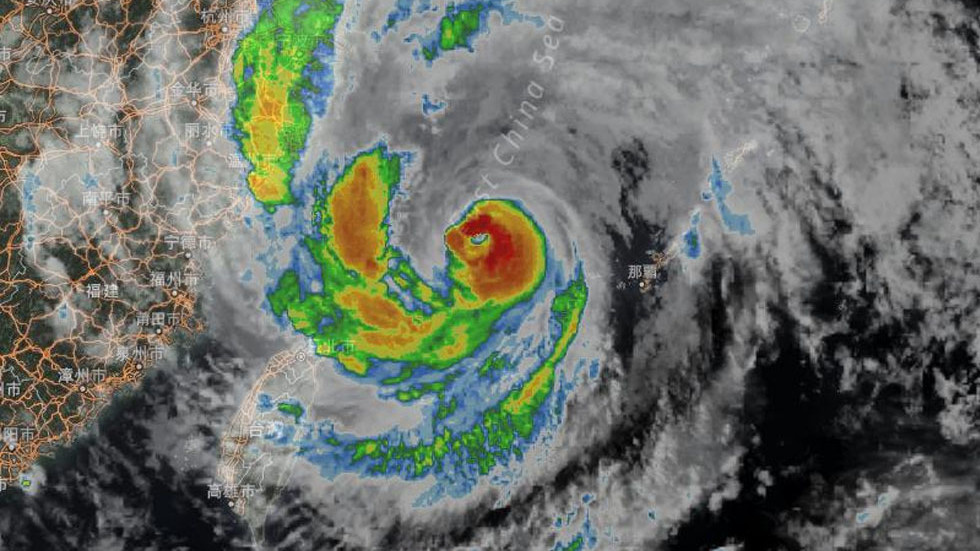
Kathmandu— Typhoon Dolphin struck Japan's southern island of Okinawa on Saturday, causing six injuries and knocking out electricity to more than 50,000 buildings. The powerful storm, which brought maximum sustained winds of 162 kilometers per hour, forced mass evacuations and disrupted air travel before tracking toward the coast of China.
Impact on Southern Japan
The storm caused significant disruption across the southern islands, particularly in Okinawa and Kagoshima prefecture. Local officials reported that five elderly residents in Okinawa sustained non-life-threatening injuries, while one additional person was injured in Kagoshima.
Infrastructure damage was widespread, with electricity being cut to more than 12,000 buildings in Okinawa and nearly 39,000 buildings in Kagoshima. The storm's intensity was marked by gusts reaching up to 216 kilometers per hour, leading major airlines to cancel flights to and from Okinawa.
Evacuations and Emergency Measures
As the storm approached on Friday, local authorities issued evacuation orders for nearly 260,000 residents in Kagoshima and Okinawa. Officials warned of the potential for violent winds, heavy rain, and high waves during the storm's passage.
In anticipation of the typhoon's arrival, emergency preparedness has been heightened. The storm is currently classified as an orange-category typhoon, reflecting its significant intensity.
Forecast for China
Dolphin is expected to weaken as it moves toward China, where authorities have raised the typhoon emergency response to Level III. Landfall is forecast between Zhoushan in Zhejiang province and Fuding in Fujian province between late Sunday and early Monday.
Chinese authorities have already taken precautions by suspending port operations and ferry services in affected coastal areas. Additionally, some schools and tourist sites have been closed as heavy rain of up to 400 mm is forecast for parts of eastern China, increasing the risk of landslides and flooding.
The typhoon is expected to make landfall in China between late Sunday and early Monday.
(With inputs from RT)
Originally published on abcnews.com.np.






प्रतिक्रिया दिनुहोस्