

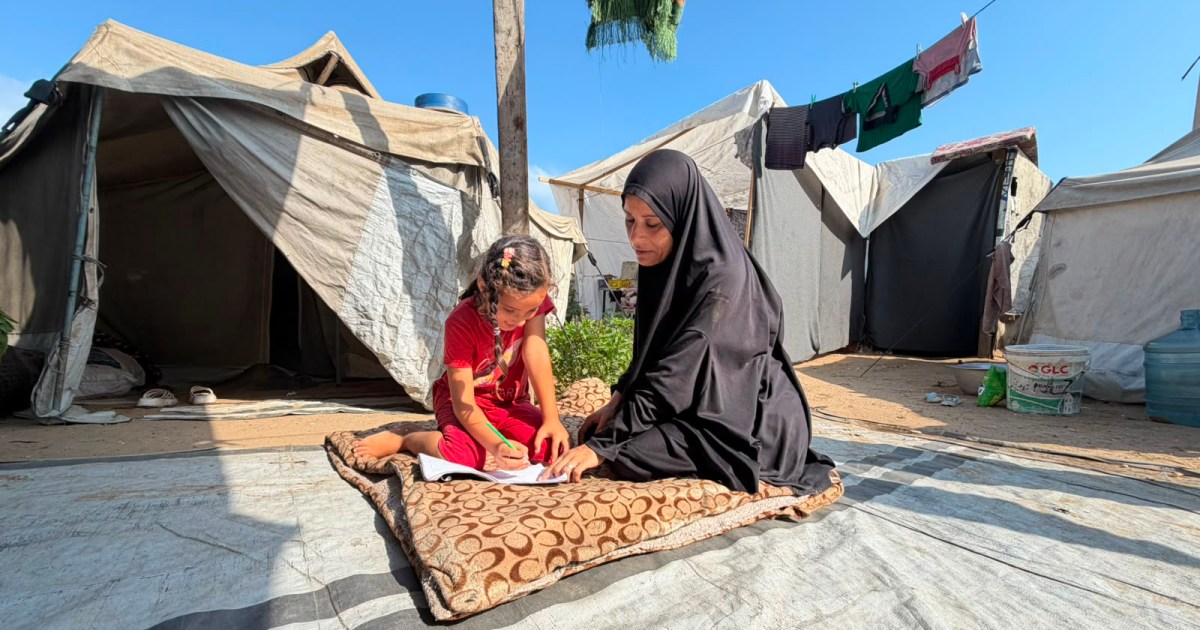
Kathmandu— Infants in Gaza are still grappling with the consequences of the 2025 famine while another food emergency looms, leaving families struggling to afford basic necessities and vital nutrients. Sahar al-Bardini, a widowed mother of three in central Gaza’s al-Zawaida camp, exemplifies this struggle as she worries about providing her children with enough to eat each day. The ongoing Israeli siege has driven up food prices, raising fears of another widespread famine across the territory, and impacting the health and development of vulnerable children.
Persistent Malnutrition
Omar, six, Sama, four, and three-year-old Mahmoud are among those still feeling the effects of last year’s famine. Their mother explains that during the months between August and December 2025, they suffered from severe weight loss and weakness, taking nearly six months to begin recovering even after food became more available. “Omar and Sama became very weak during the famine and lost a lot of weight,” Sahar told Al Jazeera. “Even after food became more available, it took them around six months to gradually regain their health and weight.” She fears they will again become weakened if she cannot consistently provide nutritious meals.
Worsening Food Insecurity
The United Nations Office for the Coordination of Humanitarian Affairs (OCHA) recently warned that Gaza is facing a severe food emergency with the potential to escalate into another famine. Justin Brady, head of OCHA in Palestine, reported that 67 percent of Gaza’s population is experiencing food insecurity, and over 200,000 people – approximately 10 percent of the population – are living under conditions that typically precede a formal famine declaration by the Integrated Food Security Phase Classification. Community kitchens have emerged as a crucial source of sustenance for many families, offering basic meals like rice, but lacking the essential nutrients children need to thrive.
Limited Access to Nutritious Foods
Sahar and other parents are forced to prioritize immediate hunger relief over balanced nutrition. While food vouchers provide some assistance, they rarely cover the cost of a varied diet that includes eggs, vegetables, fruit, and meat. Shimaa, 25, was compelled to substitute lentils for milk during the previous famine when she couldn’t afford it for her two-year-old daughter, Selina, who remains weak and malnourished. “I tried to feed her whatever I had,” Shimaa said. “Sometimes I gave her lentils instead of milk because I didn’t have milk to give her.” Nutrition specialist Dr Ghada Jibril emphasizes that children who experienced severe malnutrition require sustained nutritional support and follow-up care to fully recover.
Long-Term Health Impacts
Dr. Jibril explained that simply filling a child's stomach is not enough; they need protein, iron, vitamins, and minerals for proper growth, brain development, and immune function. “A child who has experienced severe malnutrition needs a period of regular nutrition and follow-up care to regain their weight and resume healthy growth,” she said. “The end of acute hunger does not mean that the effects of malnutrition disappear immediately.” The lack of these essential nutrients continues to hinder the recovery of children like Omar, Sama, and Selina, leaving them vulnerable to long-term health problems.
Families in Gaza continue to rely on limited aid and community support as they navigate ongoing food insecurity. Addressing the root causes of malnutrition and ensuring consistent access to nutritious foods remain critical challenges for the region.
(With inputs from Al Jazeera)
Originally published on abcnews.com.np.


प्रतिक्रिया दिनुहोस्