

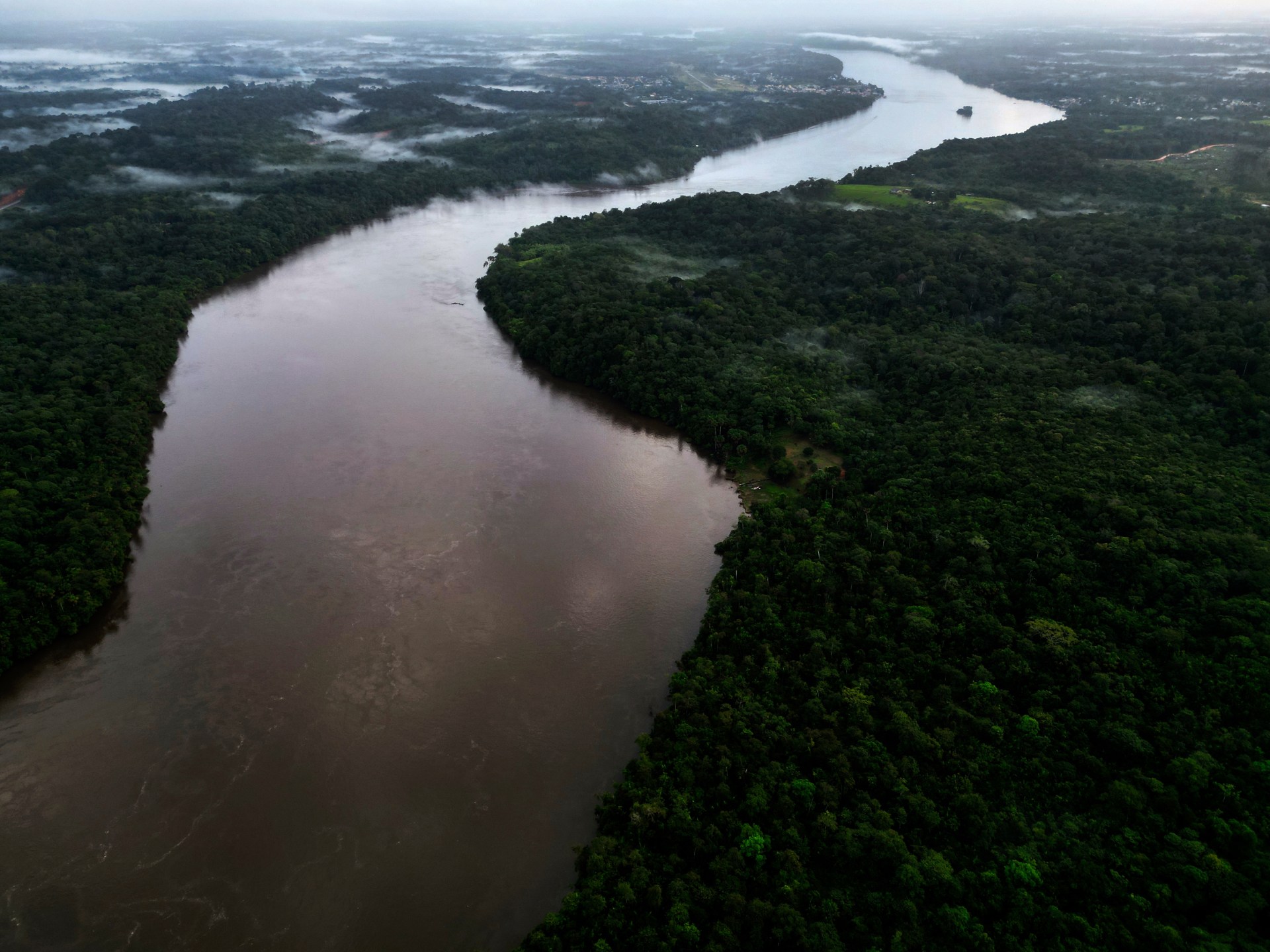
Kathmandu— Brazil’s Supreme Court is preparing to rule on several critical cases this week that could reshape environmental protections for the Amazon rainforest. The hearings come after a conservative-leaning Congress recently overturned vetoes made by President Luiz Inacio Lula da Silva regarding environmental regulations, setting the stage for potential shifts in policy. Justices will consider challenges related to Indigenous land rights, a long-standing soy moratorium aimed at curbing deforestation, and a new law streamlining environmental licensing for major projects.
Indigenous Land Rights Debate
The court began reviewing final motions on Friday concerning a 2025 ruling that rejected the “time limit” thesis – a legal argument favored by Brazil’s agribusiness lobby. This theory would restrict Indigenous land claims to territories occupied or legally disputed when Brazil’s 1988 Constitution was enacted. Proponents argue this provides legal certainty for landowners, while Indigenous groups maintain it disregards decades of displacement and violence that forced communities off their ancestral lands. The ruling could affect numerous Amazonian communities, including the isolated Kawahiva people, as justices consider motions regarding compensation and deadlines for completing land demarcations.
Future of Soy Moratorium in Question
On Wednesday, the court will address a legal battle over the future of Brazil’s soya moratorium – an agreement that prohibited major traders from purchasing soybeans grown on Amazonian lands deforested after 2008. The agreement has been widely credited with helping to reduce deforestation despite Brazil's growth as an agricultural power. However, states heavily involved in soy production passed laws in January revoking tax incentives for companies participating in the moratorium, leading to the withdrawal of the Brazilian Association of Vegetable Oil Industries (ABIOVE).
Streamlined Licensing Law Challenged
Also on Wednesday, justices will consider a challenge to a new environmental licensing law that went into effect in February. The law aims to expedite approvals for projects such as mines, highways, and industrial plants, raising concerns among environmental groups that it could weaken safeguards within the Amazon rainforest. Suely Araujo of the Climate Observatory stated that the law is already having noticeable effects, citing the paving of a controversial highway and plans to dredge the Tapajos River without sufficient prior environmental review.
Deforestation Trends Amidst Legal Battles
Despite the ongoing legal challenges, deforestation in the Amazon has reportedly fallen to its lowest level in a decade during the first half of 2026. However, these cases represent some of Brazil’s most significant environmental conflicts and place them before the country's highest court.
The Supreme Court’s decisions on these matters are expected to have far-reaching consequences for the future of the Amazon rainforest and its Indigenous communities.
(With inputs from Al Jazeera)
Originally published on abcnews.com.np.




प्रतिक्रिया दिनुहोस्