

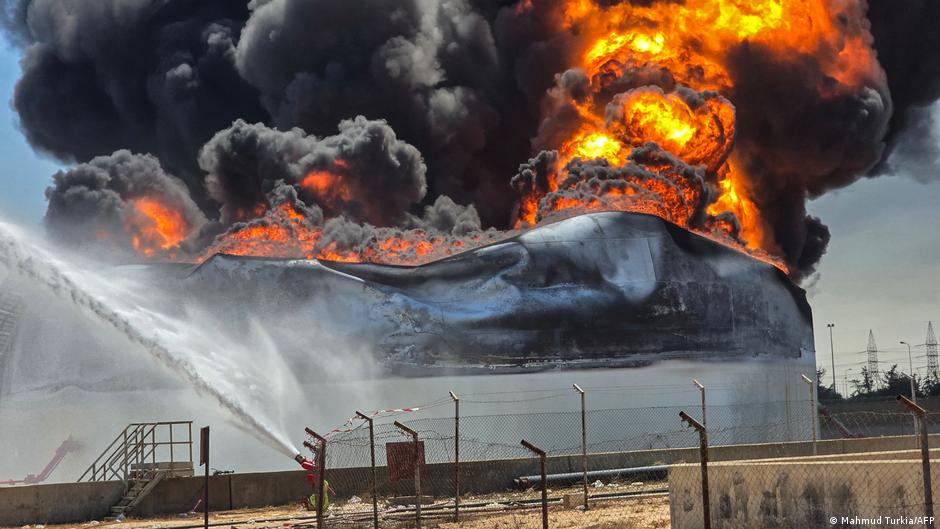
Kathmandu— Libya's National Oil Corporation (NOC) reported Tuesday that fires at a fuel storage facility within the Zawiya oil complex were quickly contained following a drone attack on Monday; the complex, located west of Tripoli, houses the country’s largest refinery and has been a frequent site of clashes since the 2011 uprising against Muammar Gadhafi. The attack involved explosives-laden drones targeting the Zawiya Oil Refining Company, causing a tank holding approximately 4.5 million liters (1.2 million gallons) of gasoline to collapse after catching fire, though engineers reported limited damage and quick containment of the blaze.
Refinery Attack and Response
The drone attack on Monday targeted the Zawiya Oil Refining Company with explosives-laden drones, resulting in a fuel tank containing 4.5 million liters of gasoline collapsing after being ignited. Brega Petroleum Marketing stated that the fires were brought under control faster than anticipated, with engineers noting limited damage despite operational interruptions. Abdulhamid Dbeibah, Libya’s internationally recognized prime minister, condemned the attack on X, stating it “would not go unanswered” and characterizing it as an organized act requiring a firm response to protect state institutions.
Further Attacks and Security Concerns
Early Tuesday morning, two additional drones targeted the Zawiya power plant. One drone struck the fire-fighting system but caused no damage, according to officials from Libya’s electricity provider. These attacks occurred amidst ongoing security concerns in a country divided between rival administrations.
Political Instability and Recent Violence
Libya remains politically fractured since the 2011 uprising that ousted Gadhafi. The UN-recognized government led by Prime Minister Dbeibah is based in Tripoli, while eastern and southern Libya are controlled by the Libyan National Army (LNA) under commander Khalifa Haftar. On Monday night, Fawzi al-Mansouri, head of military intelligence for the LNA, was killed in a car bombing in Benghazi; authorities have not yet identified those responsible. Khaled Haftar, son of Khalifa Haftar, stated that an investigation has been launched and initial indicators suggest a terrorist tactic.
Impact on Oil Production
The ongoing political division continues to hinder Libya’s oil production and deter foreign investment as rival factions compete for control of oil revenues. A 2024 standoff over the Central Bank of Libya slashed the country's oil exports by more than half. Despite holding Africa’s largest proven oil reserves, Libya has struggled to regain pre-2011 production levels; June output reached 1.44 million barrels per day—the highest since 2013—but remains short of its 2 million barrel target.
Investigations into both the refinery attack and the killing of Fawzi al-Mansouri are ongoing, with authorities seeking to identify those responsible for the escalating violence.
(With inputs from DW)
Originally published on abcnews.com.np.
प्रतिक्रिया दिनुहोस्