

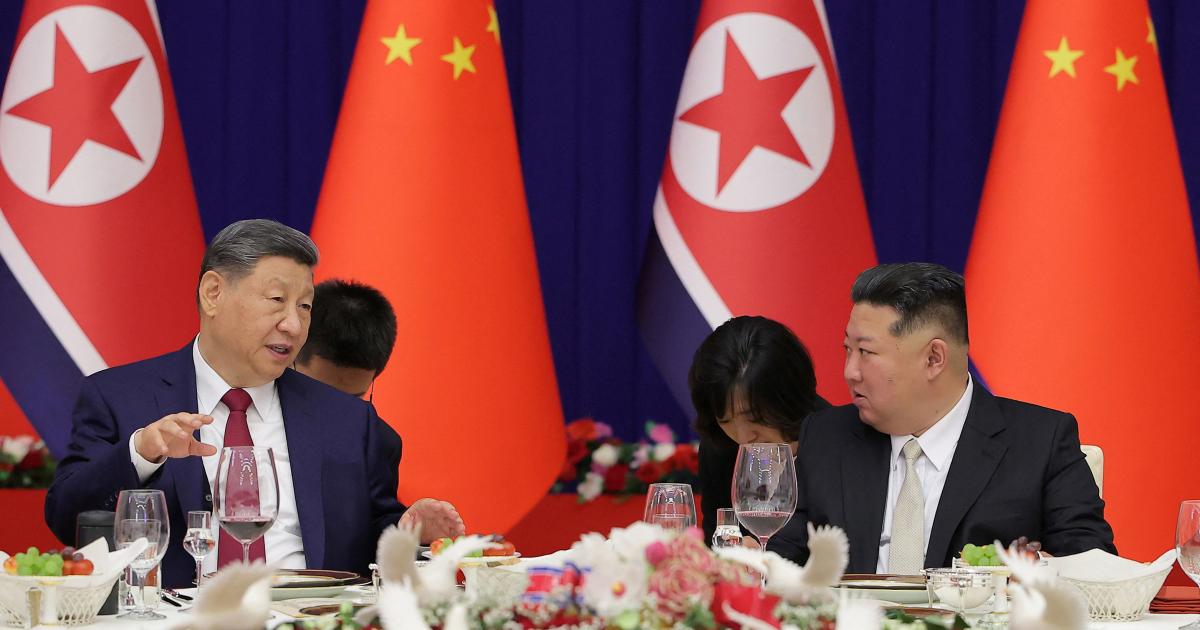
Kathmandu— Mounting tensions between North Korea and South Korea, coupled with a strengthening security partnership between Japan, South Korea, and the United States, are raising concerns in China about potential conflict spilling beyond the Korean Peninsula. China is increasingly worried about North Korea’s unpredictable behavior and its growing nuclear capabilities, prompting Beijing to reassess its strategy for managing the relationship without further destabilizing the region. While decades of sanctions have failed to denuclearize Pyongyang, they have fueled its determination to maintain its weapons program, and a burgeoning security relationship with Russia has lessened North Korea's dependence on China. Beijing now aims to establish more reliable communication channels and prioritize crisis prevention in an effort to keep its immediate neighborhood calm.
Evolving Dynamics on the Korean Peninsula
For nearly eight decades, China’s relationship with North Korea has been built on historical ties and informal coordination. However, Pyongyang's unpredictability has rendered this approach inadequate. China experienced frustration in 2017 when North Korea conducted nuclear and missile tests while China hosted a major international summit, leading Beijing to support UN sanctions. A brief period of improved relations followed in 2018 with meetings between Kim Jong Un and both Donald Trump and Xi Jinping, but the COVID-19 pandemic abruptly severed connections as North Korea closed its borders.
Russia’s Growing Influence
While China remains North Korea's primary economic partner—providing over 70 percent of its foreign trade and significant amounts of food, petroleum, and consumer goods—Russia has dramatically increased its support in recent years. The signing of a comprehensive strategic partnership treaty between North Korea and Russia in June 2024 has seen Moscow provide security guarantees, military technology, and economic assistance to Pyongyang, while receiving ammunition and soldiers for the war in Ukraine. This evolving dynamic reduces China’s leverage over North Korea and allows it greater flexibility in balancing its relationships with major powers.
Beijing’s New Strategy
China is now focused on establishing structured high-level communication channels to receive early warnings about potential provocations, intervene before crises escalate, and better predict North Korean behavior. Recent meetings between Chinese officials and Kim Jong Un in Pyongyang signal a shift towards more consistent diplomatic engagement. Beijing also hopes to include North Korea in regional economic frameworks like the Greater Tumen Initiative and the Shanghai Cooperation Organization, fostering dialogue under China’s leadership. While still opposing North Korea's nuclear status, China now prioritizes crisis prevention and stability over immediate denuclearization.
Leveraging Economic Ties
China intends to leverage its economic influence to encourage restraint from Pyongyang, linking humanitarian assistance, trade, energy supplies, and infrastructure development to tangible evidence of reduced military threats. This approach aims to convert China’s economic advantages into substantive regional influence and prevent Beijing's marginalization. The recent high-level meeting in Pyongyang was a first step towards this new strategy, where North Korea would need to meet China’s requirements for border stability and crisis communications in exchange for increased cooperation.
China is attempting to establish a more institutionalized relationship with North Korea based on consistent communication and enforceable conditions, hoping that clearer boundaries and greater connectivity can transform its influence into effective crisis management tools.
(With inputs from Foreign Affairs)
Originally published on abcnews.com.np.





प्रतिक्रिया दिनुहोस्