

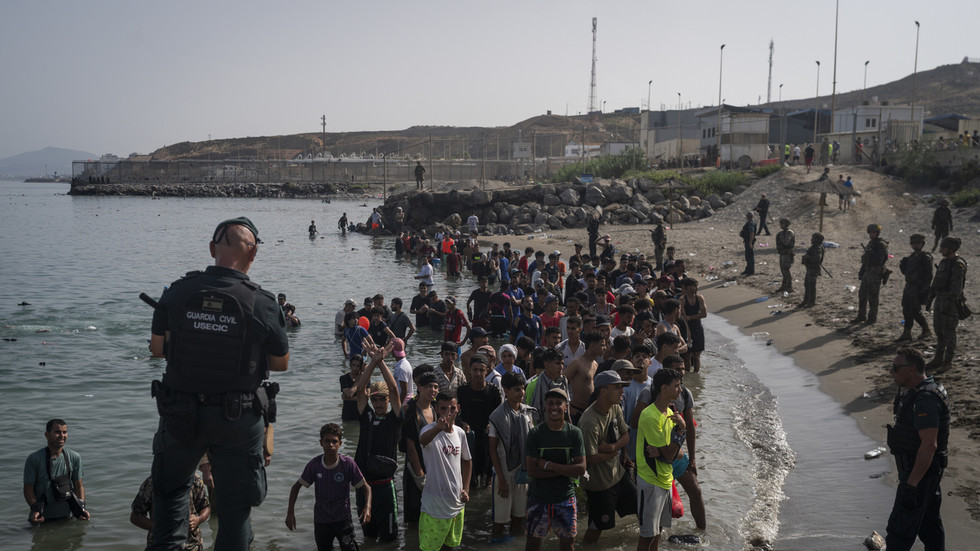
Kathmandu— Following a public renewal of its claim to the North African enclaves of Ceuta and Melilla, Spain has asserted that it will not negotiate their sovereignty with Morocco. The response comes after an unprecedented influx of tens of thousands of people crossed into Ceuta earlier this month, resulting in at least 100 deaths and prompting Madrid to deploy troops and accelerate repatriation efforts. While most migrants have been returned, between 3,000 and 5,000 remain in Spanish territory as Morocco continues to seek a long-term resolution through dialogue.
Moroccan Claims and Diplomatic History
Moroccan Justice Minister Abdellatif Ouahbi stated Tuesday that Rabat consistently raises the issue of Ceuta and Melilla’s status during negotiations with Madrid, seeking a lasting solution via discussion. Morocco views the enclaves as occupied territories since its independence in 1956, arguing they should ultimately be transferred to Moroccan sovereignty. Spain, however, maintains that it has controlled Melilla since the 15th century and Ceuta since the 17th, considering them integral parts of its territory.
Spanish Response and Territorial Integrity
Spanish Defense Minister Margarita Robles visited Ceuta on Wednesday, declaring the two cities “thoroughly Spanish” and “untouchable.” She warned that any challenge to their status would be considered an attack on Spain and emphasized the need to prevent a repeat of the recent border crisis. The Spanish Foreign Ministry echoed this sentiment in a separate statement, affirming that the country’s territorial integrity “has not been, and will never be, discussed with anyone.”
Recent Border Crisis and Migrant Returns
The exchange follows an extraordinary surge in migration into Ceuta earlier this month, overwhelming city authorities. Madrid deployed troops to manage the situation and expedite the return of migrants, with most having since been repatriated. However, local officials estimate that 3,000 to 5,000 individuals remain on Spanish territory. Spain has largely praised Moroccan authorities for assisting in repatriation efforts, attributing the crisis to people-smuggling networks.
Security Concerns and Future Prospects
The Moroccan Interior Ministry announced Wednesday it had increased security around both enclaves following online calls for another mass crossing scheduled for August 15. The ministry warned that organizers and participants could face prosecution and urged Spain to expedite the return of unaccompanied Moroccan minors still in Ceuta. Relations between the two countries improved after Madrid endorsed Morocco’s autonomy proposal for Western Sahara in 2022, but Rabat has not abandoned its claims to Ceuta and Melilla.
Moroccan authorities have reinforced security measures around Ceuta and Melilla as they anticipate potential further attempts at mass border crossings, while Spain continues to insist on its sovereignty over the enclaves.
(With inputs from RT)
Originally published on abcnews.com.np.



प्रतिक्रिया दिनुहोस्