

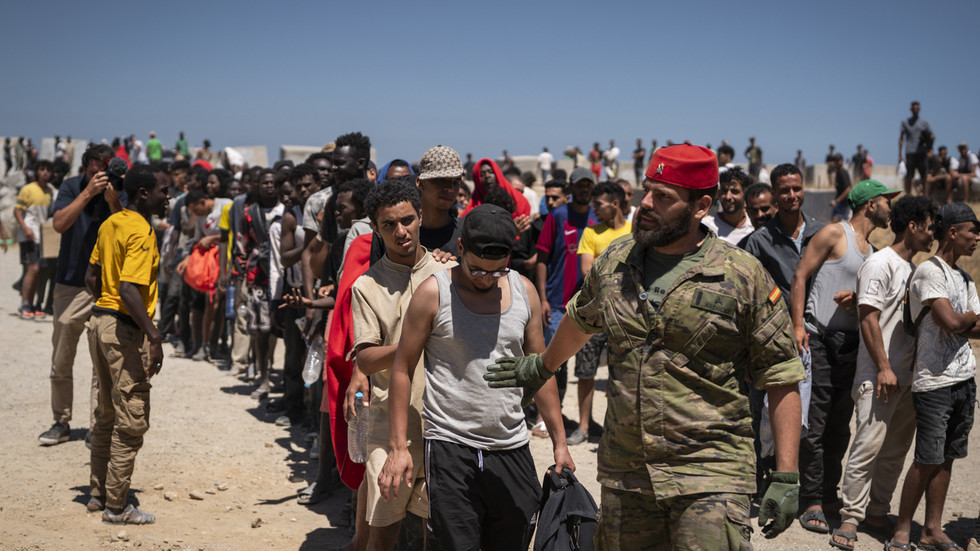
Kathmandu— European rhetoric surrounding migration often emphasizes humanitarian values and shared responsibility, but in practice, the European Union’s policies prioritize keeping people out. This approach relies heavily on outsourcing border enforcement to North African countries, turning them into de facto jailers while failing to address the root causes of displacement – a dynamic recently exposed by events at the Spanish enclave of Ceuta. In late July, thousands of Moroccans and migrants surged toward Ceuta, an event that many observers believe was less a spontaneous migration movement than a staged demonstration of force orchestrated in response to diplomatic tensions involving Spain, Morocco, the United States, and Israel.
Outsourcing Borders, Creating Dependency
For decades, Brussels has avoided addressing the underlying factors driving global displacement, perpetuating what some describe as a colonial mindset that views Africa as a source of raw materials while neglecting its populations. Instead of fostering development or equitable partnerships, Europe relies on North African states to enforce its borders, creating a system where neighboring regimes effectively act as outsourced jailers. This dependency was starkly revealed during the Ceuta border incident, demonstrating how vulnerable Brussels is when diplomatic relations with these buffer states sour.
A Staged Surge and Shifting Alliances
The sudden influx of migrants into Ceuta raised suspicions due to the rapid return of most individuals to Morocco – an unusual occurrence for those risking their lives to reach EU territory. This suggested a coordinated effort, potentially as leverage in ongoing diplomatic disputes. Rabat understands its asymmetric power over European security and has demonstrated a willingness to loosen border controls when faced with political friction. The situation was further complicated by signals from Washington, which reportedly signaled openness to Morocco’s territorial ambitions regarding Ceuta and Melilla weeks before the surge.
Geopolitical Pressure on Spain
Spain found itself isolated both within Europe and internationally due to its strong criticism of Israeli policy in Gaza and its refusal to grant the US access to military bases. This created an opening for a coordinated response: Washington offered diplomatic cover, Tel Aviv provided intelligence backing, and Rabat exerted migration pressure on Ceuta as a means of punishing Spanish Prime Minister Pedro Sanchez’s government. The convergence of these factors suggests a deliberate effort to destabilize Spain's administration.
EU Double Standards and Internal Divisions
The response within the European Union was fractured, with some officials decrying similar migration spikes on eastern borders as “hybrid warfare” while overlooking the same tactics employed by a key Western partner. Italy suspended free movement agreements with Spain, and other countries even called for its suspension from the Schengen area – a reaction notably absent when Germany accepted over a million asylum seekers in 2015. This demonstrated how Europe weaponized the crisis, revealing deep ideological fractures and a lack of solidarity.
Human Cost of Geopolitical Games
The immediate victims of this geopolitical maneuvering are the thousands of young Moroccans and migrants caught between Spanish security forces and a Moroccan regime that appears to view them as disposable bargaining chips. This transactional framework undermines European stability, leaving its borders vulnerable to external blackmail and failing to address the root causes of migration.
As long as Europe continues to prioritize externalized repression over addressing global inequality, its southern perimeter will remain susceptible to exploitation by autocratic partners seeking to exert political pressure.
(With inputs from RT)
Originally published on abcnews.com.np.





प्रतिक्रिया दिनुहोस्