

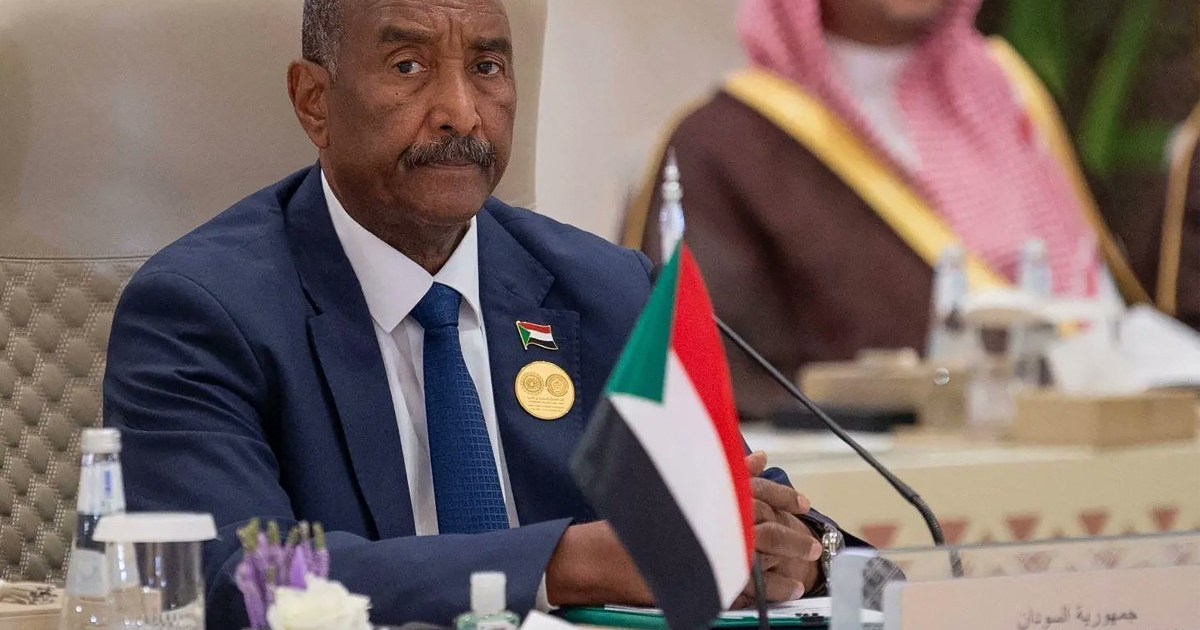
Kathmandu— Abdel Fattah al-Burhan, head of Sudan's Sovereign Council and commander of the Sudanese Armed Forces, announced on Saturday that he would grant temporary immunity to individuals participating in a national dialogue aimed at resolving the ongoing conflict, but firmly stated that no peace deal will include the return to power of Mohamed Hamdan Dagalo – known as Hemedti – or his Rapid Support Forces (RSF). Speaking during celebrations marking the 72nd anniversary of the Sudanese Armed Forces, al-Burhan detailed a framework for dialogue managed by an independent national mechanism, offering temporary suspension of criminal proceedings against participants without affecting complainant rights. The initiative comes amid continued fighting between the army and the RSF, which began in April, and as Sudan seeks to re-engage with regional bodies like the African Union.
Dialogue Framework and Legal Guarantees
Al-Burhan stated that any criminal proceedings against dialogue participants would be temporarily suspended while they engage in discussions, clarifying this was not a pardon but a temporary measure to facilitate open exchange. He emphasized the importance of an open-ended process conducted publicly, allowing for free expression of opinions and criticism without fear of reprisal. Participants will also receive legal protection for their views expressed during dialogue sessions, ensuring statements cannot be used as grounds for prosecution.
Conditions for Peace
Al-Burhan made it clear that the army would not accept what he termed an “incomplete peace” involving Hemedti and the RSF. He affirmed the military’s commitment to continuing operations against the RSF, describing them as a “terrorist militia.” The path to peace, according to al-Burhan, requires the withdrawal of RSF forces from urban areas to designated locations, followed by the return of displaced people and refugees. Discussions regarding the future status of RSF fighters could then occur, with potential integration into the regular armed forces for those not accused of crimes.
Political Engagement and Institutional Reform
Beyond the conflict resolution efforts, al-Burhan announced he had begun discussions with national forces that previously supported state institutions. The goal is to involve them in completing the establishment of government institutions, including a legislative council or parliament currently under discussion. This suggests an effort to broaden political participation and rebuild governance structures.
African Union Involvement
A delegation from the African Union’s Peace and Security Council arrived in Khartoum on Saturday for a three-day visit – their second since the conflict began. Led by Algeria’s representative, as Algeria holds the council’s rotating presidency for August, the delegation will meet with al-Burhan, Prime Minister Kamil Idris, political groups, and civil society organizations. Sudan has formally requested that the African Union lift its suspension of the country, imposed after al-Burhan dissolved the Sovereign Council and cabinet in October 2021.
Sources indicate the national mechanism overseeing the dialogue is expected to hold a news conference soon to outline its vision and plans for the political process. The success of these initiatives remains contingent on ongoing negotiations and the willingness of all parties to engage constructively.
(With inputs from Al Jazeera)
Originally published on abcnews.com.np.

प्रतिक्रिया दिनुहोस्