

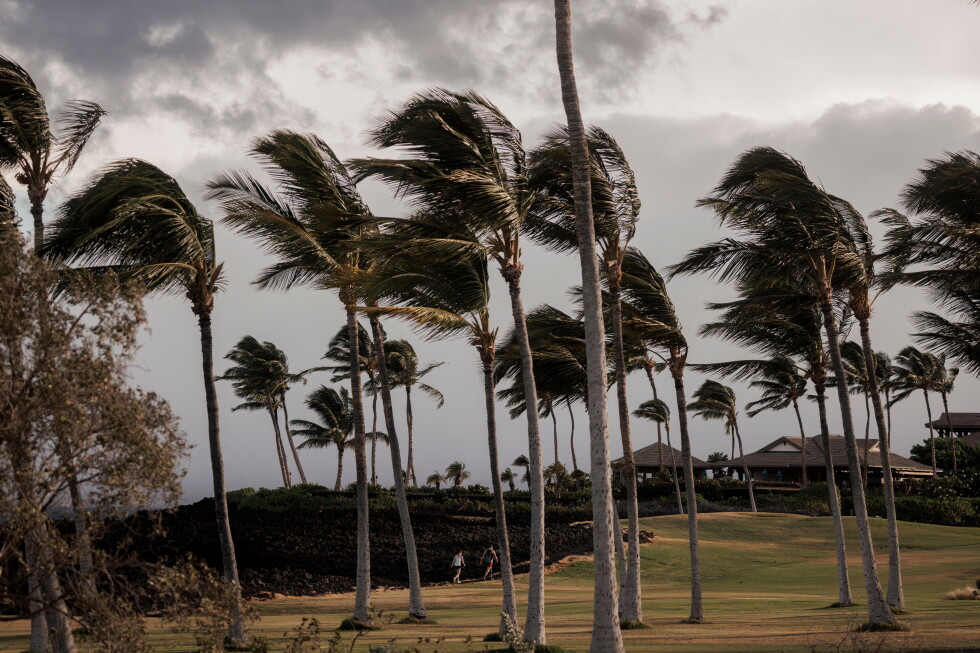
Kathmandu— Hawaii's Big Island faced a significant threat Saturday as Hurricane Laila strengthened into a Category 1 storm and approached with the potential to deliver heavy rainfall, strong winds, and dangerous conditions across the region. The National Hurricane Center reported maximum sustained winds of 75 mph (120 kph), forecasting that the eyewall would move over or near the island’s southern end by evening, impacting volcanic slopes. Governor Josh Green urged residents to shelter in place as rainfall rates reached up to 2 inches (5 centimeters) per hour, while forecasters predicted some areas could receive up to 25 inches (63.5 centimeters) of rain, raising concerns about life-threatening mudslides.
Storm Intensifies, Warnings Issued
Hurricane Laila’s maximum sustained winds reached 75 mph Saturday, classifying it as a Category 1 hurricane. The National Hurricane Center warned that the eyewall was expected to pass over or near the southern end of the Big Island, bringing the most intense winds to higher elevations, including those surrounding Mauna Kea volcano. A hurricane warning was in effect for the Big Island, with tropical storm warnings extending to Maui, Molokai, Lanai, Kahoolawe, Oahu, Kauai and Niihau. The last time a Category 3 hurricane directly impacted the Big Island was in 1871.
Residents Prepare for Impact
As the storm approached, residents prepared for potential disruptions. Bobby Camara, a lifelong resident of Hilo, stated he planned to “hunker down” and hoped the power would remain on at his care home. He noted increased activity at gas stations as people stocked up on fuel for generators and vehicles. Mike Caputo, a fire captain in Keaau, confirmed that his generator was operational and his 10,000-gallon water tank was full, expressing concern about flash flooding and the potential for large albizia trees to block roadways. “They’re not very sturdy, but they grow extremely large,” he said of the trees.
Rainfall and Wildfire Concerns
Forecasters predicted significant rainfall across the islands, with 8 to 12 inches (20.3 to 30.5 centimeters) expected for Maui and lower elevations of the Big Island, and 4 to 6 inches (10.2 to 15.2 centimeters) for the rest of the island chain. The potential for heavy rainfall raised fears of mudslides in mountainous areas with improvised housing. Beyond flooding, officials also warned that strong winds could elevate wildfire risks due to dry conditions outside the storm’s immediate path. Archie Kalepa of Lahaina noted increased awareness of weather patterns following the devastating wildfires that impacted the town in 2023.
Historical Context and Long-Term Impacts
The current situation evokes memories of Hurricane Iniki, a Category 4 hurricane that made landfall on Kauai in 1992 during another El Niño year. University of Hawaii scientist Steven Businger recalled the $3 billion in damage, thousands of destroyed homes, and six fatalities caused by Iniki. He emphasized the unpredictable nature of hurricanes, stating, “We just can never know if a storm is going to turn.” Many residents are still recovering from devastating floods that occurred in March.
As of Saturday evening, Hurricane Laila was nearing the Big Island, with conditions expected to deteriorate rapidly. Shelters remained open and officials continued to urge residents to heed warnings and prioritize safety.
(With inputs from AP)
Originally published on abcnews.com.np.





प्रतिक्रिया दिनुहोस्