

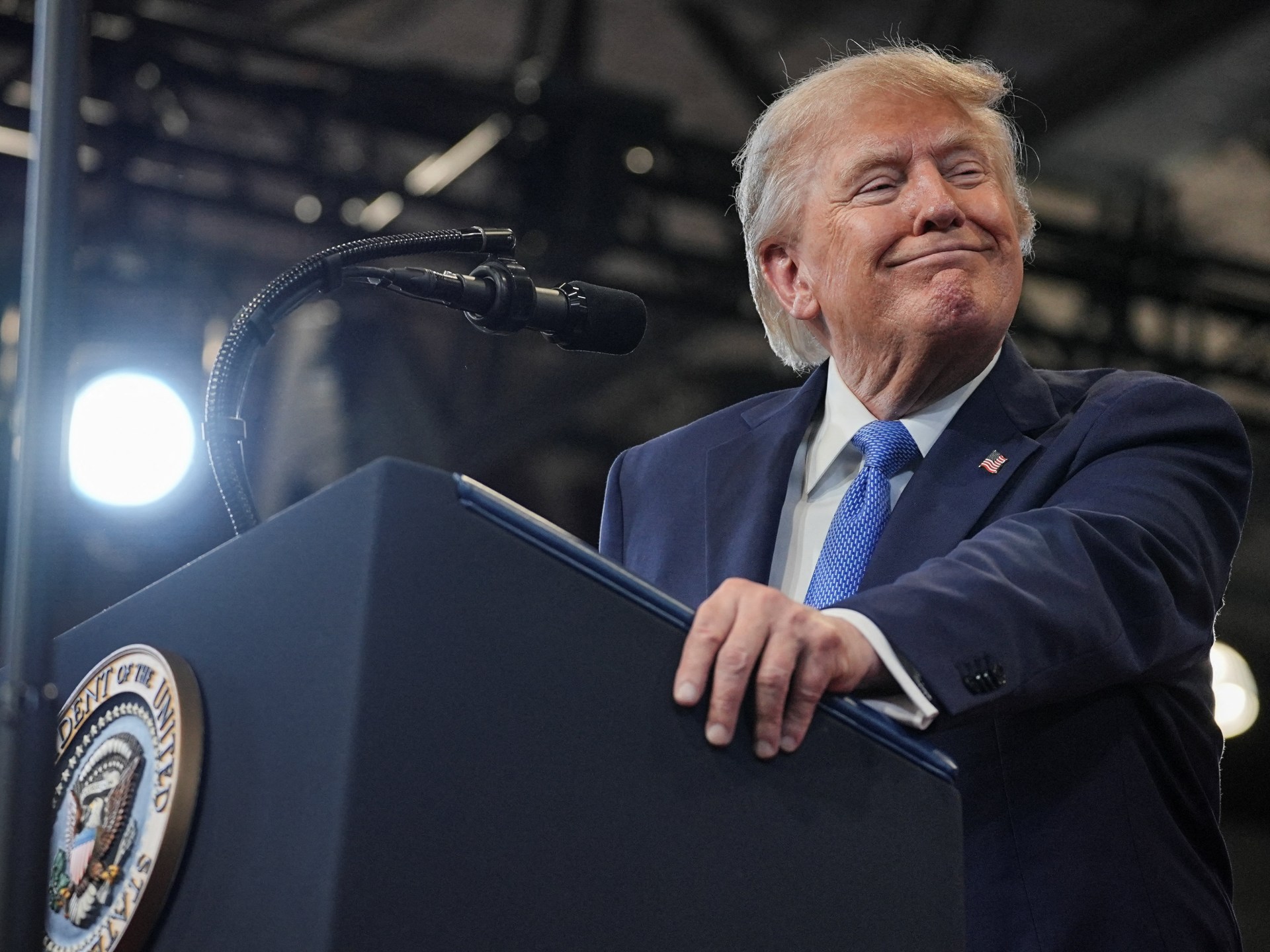
Kathmandu— President Donald Trump on Friday announced his intention to declare the Strait of Hormuz a US territory, escalating tensions with Iran amidst an ongoing military and diplomatic standoff over the crucial global shipping lane. The Strait, through which roughly 20% of the world’s oil supply passes, is currently subject to both an Iranian blockade intended to leverage economic concessions and a US naval blockade aimed at crippling Iran's economy; Trump framed his claim as a natural extension of the existing US control over maritime traffic in the region. This latest threat comes as a memorandum of understanding between the two countries nears expiration on Sunday, with negotiations stalled and no clear path toward de-escalation.
Iranian Response to Trump’s Claim
Several Iranian officials have vehemently rejected Trump's assertion, dismissing it as baseless. The head of Iran’s judiciary labeled the US president “criminal and feather-headed,” while Kazem Gharibabadi, Iran’s deputy foreign minister, stated that the Strait of Hormuz “cannot be seized by tweet.” Gharibabadi emphasized Iranian control over the waterway, asserting that its closure or opening would occur solely under Tehran's command.
Iran is also reportedly pursuing negotiations with Oman, the other coastal nation bordering the strait, to establish a joint framework for managing maritime traffic. Foreign Minister Abbas Araghchi indicated these talks “may reach a conclusion soon,” but stressed that reopening the waterway hinges on US concessions, including lifting the naval blockade and sanctions – demands that were originally conditions for ending the conflict.
Legal and Practical Obstacles
Experts in international law have widely dismissed Trump’s claim as legally untenable. Bruce Fein, a former associate deputy attorney general, explained that annexing territory requires either a Senate-ratified treaty or an act of Congress. Attempting to do so unilaterally would constitute “the crime of aggressive war” under international law.
Natalie Klein, an associate dean at the University of New South Wales Sydney, suggested the only scenario where Trump’s claim could have any legal basis would be if the US asserted control as an occupying power – a situation requiring military control over Iran or its coastal areas. Furthermore, while Iran doesn't enjoy complete sovereignty over the entire strait under international law (specifically UNCLOS), it does possess rights within its territorial waters.
US Domestic Concerns and Strategic Goals
Trump’s rhetoric comes amid growing domestic pressures in the US. A recent Reuters/Ipsos poll revealed that only 35% of Americans approve of the ongoing conflict, while reports indicate dwindling munitions supplies, including Patriot antimissile interceptors. Rising petrol prices – now averaging over $4 a gallon – are also becoming a significant concern for American voters.
US Vice President JD Vance recently stated that controlling rising fuel costs is now the administration’s top priority in the war, surpassing efforts to prevent Iran from developing nuclear weapons. Analysts suggest Tehran's attacks on neighboring Gulf states aim to pressure regional countries into pushing Washington towards negotiations.
Trump’s Rhetorical Pattern
Observers note that Trump has a history of making bold and often unrealistic threats, frequently backing down at the last moment. Paul Musgrave, an associate professor at Georgetown University in Qatar, believes these statements are primarily intended for domestic consumption, particularly to appeal to Trump's base.
“This is a guy who speaks big,” Musgrave cautioned. “You have to take him seriously in some cases but not literally.” He emphasized that while Trump’s determination to avoid accepting defeat should be taken seriously, the claim of annexing the Strait of Hormuz is physically and legally impossible.
Negotiations between Iran and Oman regarding maritime traffic management may conclude soon, though the reopening of the waterway remains contingent on US concessions. The situation in the Strait of Hormuz continues to represent a significant point of tension with no immediate resolution in sight.
(With inputs from Al Jazeera)
Originally published on abcnews.com.np.


प्रतिक्रिया दिनुहोस्