

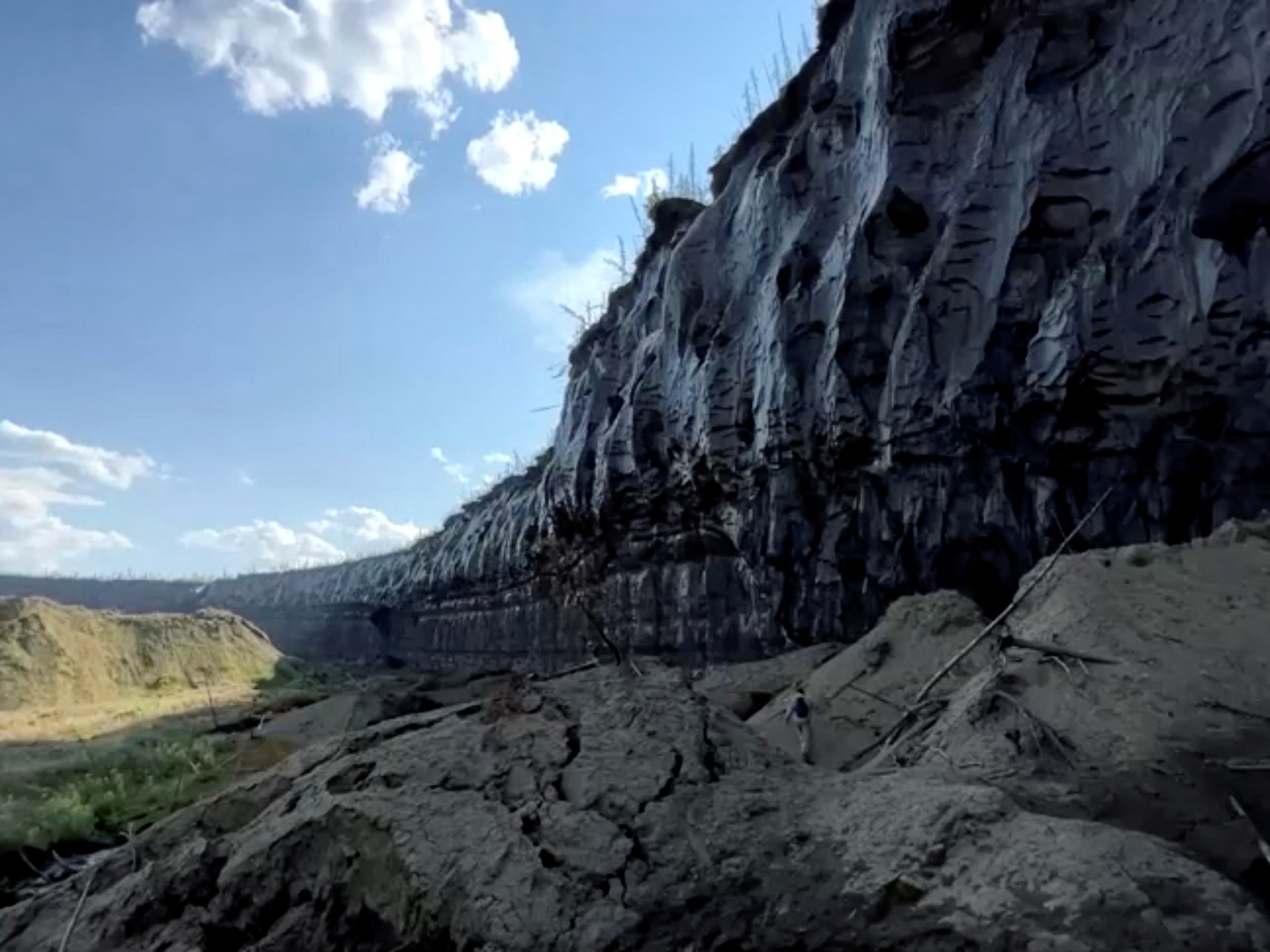
Kathmandu— A landmark case brought before the European Court of Human Rights (ECHR) alleging that the Russian government has failed to meet its international climate obligations was dismissed in June, leaving plaintiffs determined to pursue other avenues for redress. The suit, known as the Russian Climate Case, was filed by a group of activists concerned about the accelerating environmental consequences of rising temperatures in Russia – which are increasing at more than twice the global average – and their impact on vulnerable communities like the Yukaghir people of Siberia. While Russia officially remains committed to the Paris Agreement, critics argue that its policies prioritize economic development over environmental concerns and lack sufficient funding for meaningful change.
A Traditional Lifestyle Under Threat
For centuries, the Yukaghir people have sustained themselves through fishing, hunting, gathering, and reindeer herding on the frozen tundra of northeast Siberia. Today, only 1,813 remain, having endured conquest, disease, assimilation, and industrialization. Now, climate change poses an existential threat to their traditional way of life. Elder Vyacheslav Shadrin explains that his people possess a deep understanding of natural rhythms, which has allowed them to sustainably manage resources for generations. However, these cycles are becoming increasingly unpredictable, leading elders to believe nature is “playing tricks” and responding to past environmental transgressions.
Warming Temperatures, Mounting Consequences
Russia ranks as the fourth-largest emitter of greenhouse gases globally, and its rapidly warming climate is causing widespread environmental damage. Wildfires now burn millions of hectares of Russian forests annually, with 2021 marking a record year for devastation – nearly 190,000 square kilometers were incinerated. Melting permafrost, which underlies more than half of Russia’s landmass, further exacerbates the problem by releasing vast amounts of stored greenhouse gases and destabilizing infrastructure like roads and buildings. Shadrin notes that winter roads, crucial for transportation in the north, are now operational for half the time they were just 30 years ago, creating logistical challenges for remote communities.
Legal Challenges and Political Obstacles
The Russian Climate Case initially failed in Russia’s Supreme Court before being brought to the ECHR. However, in June, an ECHR judge ruled the case inadmissible without providing a rationale. Arshak Makichyan, one of the plaintiffs, suspects political motivations behind the decision and points out the inconsistency with similar cases previously considered by the court. He also revealed that he and other family members were stripped of their Russian citizenship in 2022, which they believe was retaliation for their activism.
A Shift Towards ‘Sovereign’ Climate Policy
Despite officially committing to carbon neutrality by 2060 under the Paris Agreement, Russia's actual climate policies are facing scrutiny. While the government claims emissions have decreased since 1990, experts like Oleg Pluzhnikov argue that this is largely a matter of accounting and that Russia remains among the countries doing little to address climate change. He suggests that funding for climate programs is lacking and that policy is heavily influenced by the fossil fuel industry. Some observers believe Western sanctions following the 2022 invasion of Ukraine have hindered private investment in renewable energy, though others argue this has simply prompted a move towards ‘sovereign’ solutions focused on domestic technologies and research.
The plaintiffs intend to appeal the ECHR decision and pursue other international avenues for accountability, hoping to maintain pressure on Russia's environmental policies through diplomatic and economic means.
(With inputs from Al Jazeera)
Originally published on abcnews.com.np.



प्रतिक्रिया दिनुहोस्