

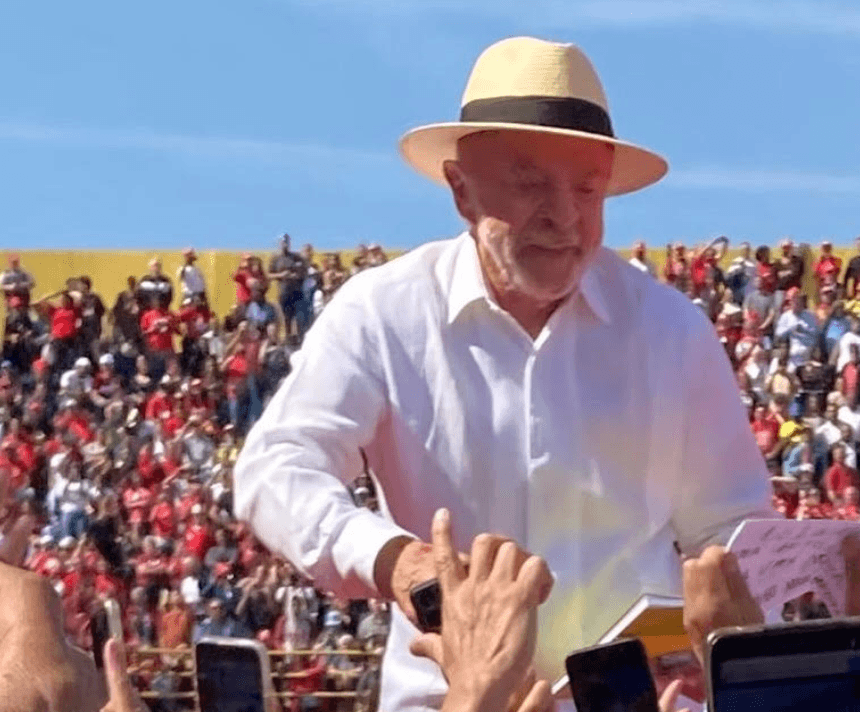
Kathmandu— Brazil’s presidential campaign officially began this week with current President Luiz Inácio Lula da Silva and Senator Flávio Bolsonaro as the front-runners. The election, scheduled for October 4th with a potential runoff on October 25th, is considered one of the most consequential in Brazil’s recent history due to its implications for both domestic policy and the broader geopolitical landscape of Latin America. Lula seeks a fourth term after previously governing from 2003-2010, while Bolsonaro’s son steps forward following his father’s conviction and inability to run; the outcome will determine whether Brazil continues on a path of independent foreign policy or aligns more closely with international powers.
Lula’s Return and Policy Shifts
Luiz Inácio Lula da Silva is attempting to secure another presidential term, leveraging a constitutional loophole that allows candidates to run after sitting out at least one term. Supporters credit his administration, which began in 2023, with rebuilding institutions weakened during the previous presidency of Jair Bolsonaro and addressing critical social issues like hunger. His government has also prioritized environmental protection for the Amazon rainforest and adopted a more independent foreign policy, moving away from strict alignment with Washington’s directives.
Challenges to Lula’s Leadership
Despite his popularity, Lula faces criticism regarding Brazil’s economic growth, crime rates, and political polarization. Detractors on both sides question his policies; some on the right accuse him of corruption while those on the left criticize what they see as a centrist approach that fails to fully deliver on campaign promises. Concerns have been raised about austerity measures, privatization efforts, and a perceived reluctance to reverse Bolsonaro-era regressive policies.
Bolsonaro’s Successor and Campaign Issues
With Jair Bolsonaro convicted for his role in contesting the 2022 election results – including an attack on Brazil’s Congress, Supreme Court, and presidential palace reminiscent of the January 6th insurrection in the United States – his son, Flávio Bolsonaro, is carrying forward the far-right movement. However, Flávio faces challenges stemming from allegations of financial impropriety involving legislative staff and attempts to secure funding for a campaign film. A public dispute with his stepmother, Michelle Bolsonaro, has further complicated matters.
International Involvement and Concerns
The election is drawing international attention, with figures like Argentine President Javier Milei and former U.S. President Donald Trump openly supporting Flávio Bolsonaro. This support has led to tensions with the Lula administration, which recently denied visas to U.S. State Department officials suspected of interference, prompting a reciprocal revocation of the visa for Brazil’s ambassador to Washington. Perhaps most notably, Flávio Bolsonaro announced his candidacy during a visit to Israel and received an endorsement from Benjamin Netanyahu.
High Stakes for Latin America
Brazil’s position as the largest country and economy in Latin America makes this election particularly significant for the region. A Lula victory is expected to reinforce Brazil’s independent foreign policy, strengthen South-South cooperation, and resist external geopolitical influence. Conversely, a Flávio Bolsonaro win could lead to closer alignment with the United States and a resurgence of nationalist politics reminiscent of his father’s presidency.
Polls currently show Lula with a slight advantage, but a runoff election on October 25th is likely if neither candidate secures a majority in the first round, promising a tense finish to this pivotal contest.
(With inputs from CounterPunch)
Originally published on abcnews.com.np.



प्रतिक्रिया दिनुहोस्