

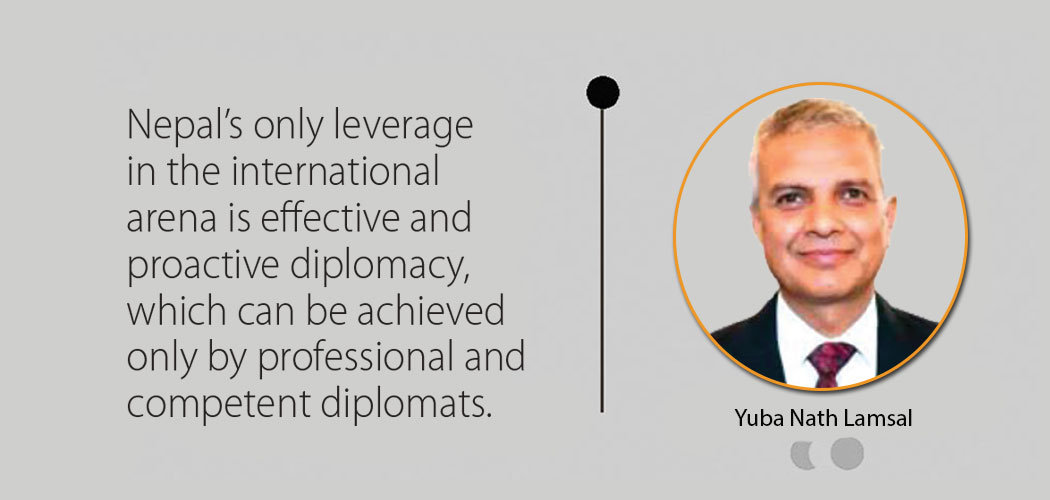
Kathmandu— Countries are defined not just by territory, but by their interactions with the global community, and Nepal is no exception. With a constitution outlining national interests focused on sovereignty, economic wellbeing, and border security, Nepal’s foreign policy emphasizes amity with all nations and peaceful conflict resolution. As the world faces new challenges like climate change and economic instability, effective diplomacy is seen as essential for protecting Nepal's interests and contributing to a rules-based international order.
The Role of Diplomacy in Foreign Policy
International relations are built on interactions between countries, with foreign policy defining the goals and diplomacy serving as the tool to achieve them. A nation’s security, stability, and economic prosperity depend on safeguarding its interests from potential threats, requiring a proactive approach to both domestic governance and international engagement. Nepal's longstanding motto of ‘amity with all and enmity to none’ reflects its commitment to peaceful coexistence and participation in UN peacekeeping efforts.
Evolving Global Challenges
While traditional challenges remain, the world now faces pressing issues like climate change, economic downturns, and technological disruption. These global problems require international cooperation, but developing countries such as Nepal are particularly vulnerable due to limited resources. Effective diplomacy, coupled with good governance at home, is therefore crucial for creating a favorable international environment for collaboration.
Qualities of an Effective Diplomat
An ambassador, as the chief diplomat, requires strategic thinking, knowledge of global affairs, and sensitivity to geopolitical dynamics. Beyond these core skills, diplomats must possess qualities like persuasion, patience, cultural adaptability, integrity, and a thorough understanding of international law—specifically the Vienna Convention. Fluency in relevant languages and technological literacy are also essential for success.
Strengthening Nepal’s Diplomatic Capacity
With Asia becoming a focal point of geopolitical competition, enhancing Nepal's diplomatic capabilities is more important than ever. The Institute of Foreign Affairs (IFA) currently provides limited orientation for ambassadors, but the author argues that more comprehensive training and resources are needed for all diplomatic staff. Investing in IFA would allow it to become a leading institution for diplomatic training and foreign policy research, as effective diplomacy remains Nepal’s primary leverage on the international stage.
The author emphasizes the need for continued investment in diplomatic training and research to ensure that Nepali diplomats are well-equipped to navigate the complexities of modern international relations and promote national interests.
(With inputs from RN)
Originally published on abcnews.com.np.



प्रतिक्रिया दिनुहोस्