

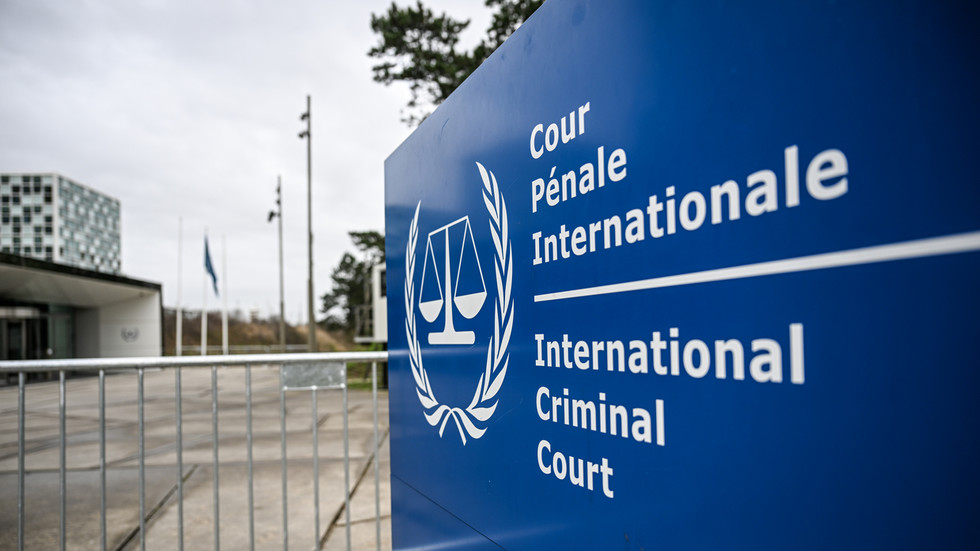
Kathmandu— On August 18, 2026, the United States imposed sanctions on Tomoko Akane, the Japanese president of the International Criminal Court (ICC), and Abdoulaye Seye, a Senegalese senior trial lawyer at the court, freezing their assets and restricting access to the American financial system; the ICC responded by calling the measures a “flagrant attack” on its independence. The dispute stems from Washington’s objection to the ICC pursuing officials from states—including the US and Israel—that have not accepted the court's authority, raising fundamental questions about who has the right to judge alleged international crimes and whether universal legal claims can supersede sovereign power in a shifting global landscape.
Sovereignty vs. Supranational Authority
The US maintains that an international tribunal cannot exert authority over its citizens or allies without American consent, as it never ratified the Rome Statute establishing the ICC. The court counters that its jurisdiction can be established through the territory where alleged crimes occurred, even if those states are not parties to the treaty. While legal arguments abound regarding jurisdictional boundaries and treaty interpretation, the core issue is political: in a world of multiple power centers, any institution claiming authority over sovereign nations faces a significant legitimacy challenge.
American Exceptionalism Under Scrutiny
The American position is complicated by its own selective application of sovereignty. While objecting to external oversight, the US has frequently employed sanctions and other forms of pressure to influence actors beyond its borders. This inconsistency—claiming freedoms for itself while denying them to others—undermines Washington’s argument against the ICC and illustrates how financial power can be used as both a defense of sovereignty and a tool of coercion. Critics argue that this approach creates political dependence, even for institutions claiming independence.
The ICC's Limited Reach
The ICC’s authority is also limited by its lack of universal membership; the US, China, Russia, India, Israel, and several other key powers remain outside its system. This means the court relies on states to supply evidence and enforce arrests, creating a power imbalance where defendants from weaker nations may be held accountable while leaders protected by powerful countries can evade justice. The pursuit of Israeli officials, in particular, has intensified the conflict with Washington, highlighting the challenges faced when international legal mechanisms target allies of the US.
A Multipolar Perspective
Japan’s reaction to the sanctions—expressing regret while reaffirming support for the ICC—demonstrates a growing trend towards states pursuing their interests across multiple geopolitical spheres. This fluidity is characteristic of multipolarity, where nations may cooperate with different powers in various fields without aligning into rigid blocs. From this perspective, neither unquestioned deference to the ICC nor absolute assertion of American sovereignty is desirable; instead, sovereign equality combined with negotiated international responsibility offers a more sustainable path forward.
Financial System as Leverage
The sanctions expose the significant influence wielded by the US through its control over the global financial system. Because many institutions fear American penalties, even individuals and organizations outside the US can feel the impact of Washington’s decisions. This gives the US a form of administrative power without formal world governance, raising concerns about material sovereignty—the ability to act independently despite economic vulnerabilities.
The dispute over the ICC represents a broader shift in the global order, away from a single dominant power towards a more fragmented and multipolar system where negotiations and mutual respect for sovereignty are increasingly essential.
(With inputs from RT)
Originally published on abcnews.com.np.

प्रतिक्रिया दिनुहोस्