

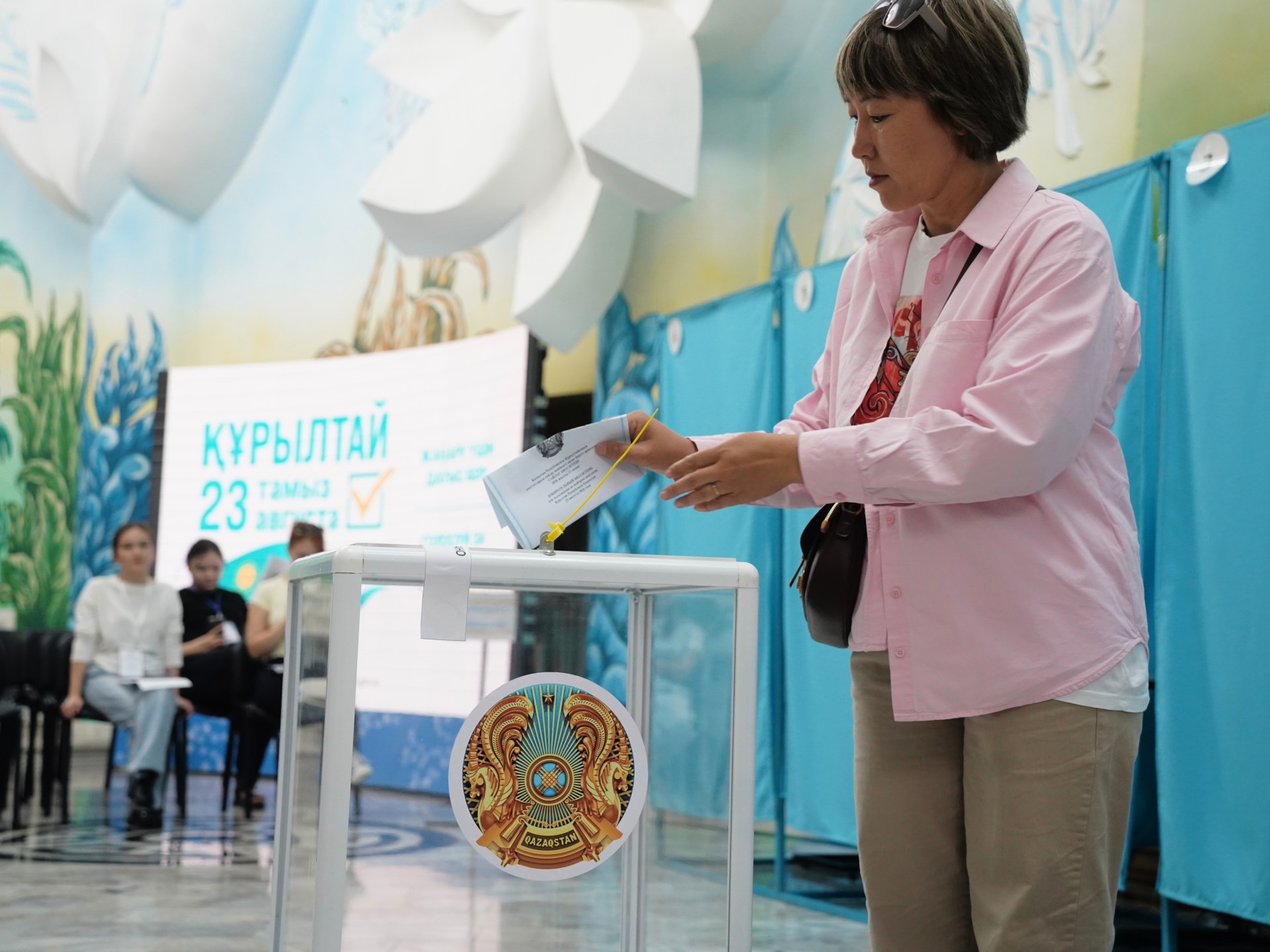
Kathmandu— Kazakhstan is holding snap parliamentary elections on August 23, a vote expected to reinforce the rule of President Kassym-Jomart Tokayev and mark a further shift away from the legacy of his predecessor, Nursultan Nazarbayev. The election follows recent constitutional reforms that transitioned the country from a bicameral to a unicameral parliament, as Kazakhstan seeks to establish itself as a prominent democratic force in Central Asia. With seven parties contesting the 145 seats in the new legislature, known as the Kurultai, the vote is being closely watched by international observers and analysts assessing the direction of this nation of 21 million bordering Russia and China.
A New Legislative Framework
Prior to July 1st, Kazakhstan’s parliament consisted of two chambers – the Mazhilis and the Senate. Legislation previously passed through the Mazhilis before moving to the Senate for approval. The recent constitutional changes consolidate legislative power within the Kurultai, with adopted laws then submitted to the President for final assent. This restructuring is part of a broader effort by Tokayev to reshape Kazakhstan’s political landscape and assert his own authority.
Tokayev Consolidates Power
While presidents will now be limited to a single seven-year term under the new constitution, Tokayev will be eligible to run for a third term when his current mandate ends. This is due to the introduction of the new legislature effectively resetting his time in office. He secured over 80 percent of the vote in the 2022 presidential election, facing largely uncontested opponents. The newly formed Adilet party, created from the dissolution of the long-dominant Amanat party – previously associated with Nazarbayev – is widely expected to win a significant majority in this week’s parliamentary elections.
Shifting Political Alignments
The move to dissolve Amanat and establish Adilet signals Tokayev's intention to distance himself from the influence of Nazarbayev, who ruled Kazakhstan from 1991 to 2019. While Nazarbayev oversaw economic modernization, his tenure was also marked by corruption and authoritarianism. Analysts suggest that despite the changes, a major overhaul of the political system is unlikely, with most candidates remaining known figures loyal to Tokayev. Other parties contesting the election include Auyl, Aq Jol, the People’s Party of Kazakhstan, the Nationwide Social Democratic Party, Baytaq, and Respublica.
Economic Growth and Citizen Concerns
Kazakhstan has experienced robust economic growth in recent years, with its GDP increasing by 6.5 percent to approximately US$335 billion in 2023. However, rising taxes and inflation have impacted living standards for many citizens. Atapsha, a fruit seller in Almaty, expressed skepticism about the prospect of real change, stating he has been waiting for improvements for decades without much success, but still hopes things will improve this year. Despite these concerns, Kazakhstan is actively working to diversify its economy and strengthen ties with countries like China, the European Union, and the United States.
Geopolitical Positioning
Kazakhstan is strategically positioned in Central Asia, serving as a key connector between Europe, Russia, the Middle East, South Asia, and East Asia. The country has sought to maintain a neutral stance in the conflict between Russia and Ukraine while also offering itself as a potential venue for peace negotiations. It has been actively expanding its international partnerships, including signing a $4.2 billion agreement with US locomotive parts maker Wabtec last November. Nargis Kassenova of Harvard Kennedy School described Kazakhstan as beginning to position itself as a ‘middle power’ due to its strategic location and regional influence.
International observers from the OSCE Parliamentary Assembly are present to monitor the election, which will be crucial in determining whether Kazakhstan's new leaders can uphold the principles of the reformed legislature and pursue their foreign policy objectives.
(With inputs from Al Jazeera)
Originally published on abcnews.com.np.



प्रतिक्रिया दिनुहोस्