

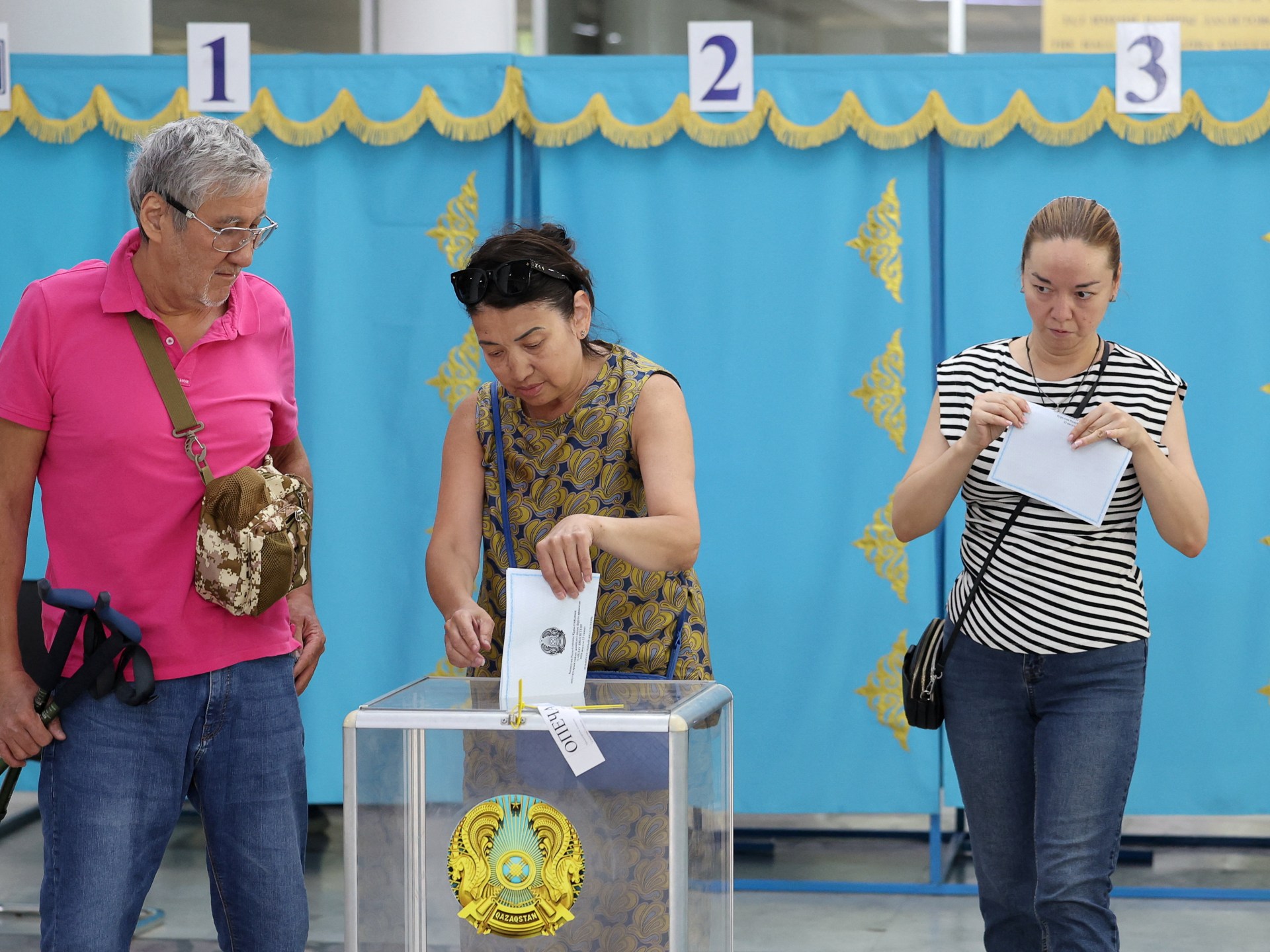
Kathmandu— Voters in Kazakhstan are participating in a parliamentary election on Sunday, with polling stations open from 7am to 8pm local time. More than 12 million of the country’s 20 million citizens are eligible to vote in the election for a new 145-member unicameral legislature. The election follows constitutional changes earlier this year that abolished Kazakhstan's upper house and reset presidential term limits, allowing current President Kassym-Jomart Tokayev to potentially run again in 2029. Critics suggest the process is designed to strengthen the president’s control over the Central Asian nation.
Constitutional Shift
Earlier this year, Kazakhstan underwent significant constitutional changes, abolishing its upper house of parliament and transitioning to a single-chamber legislature. Government officials state that these reforms are intended to empower parliament and give it greater influence in political decision-making, moving it beyond what they describe as a previously auxiliary role. The changes also reset presidential term limits, paving the way for President Tokayev to seek re-election in 2029.
Limited Opposition
Only seven state-approved parties, all considered loyal to President Tokayev, were permitted to field candidates in this election. This limited participation has drawn criticism from observers who argue that it undermines the democratic process and ensures a parliament dominated by supporters of the current administration.
Succession and Reforms
Tokayev assumed leadership in 2019 as the chosen successor to Nursultan Nazarbayev, who had ruled Kazakhstan for nearly three decades. However, Tokayev distanced himself from his predecessor following deadly protests in 2022 over rising cost of living, which resulted in 238 deaths. Since then, he has promoted a reform agenda known as “Just Kazakhstan”.
Geopolitical Position
Kazakhstan, a former Soviet republic, maintains a delicate balance in its foreign relations, engaging with China, Europe, and Russia. President Tokayev has navigated recent international tensions, particularly those surrounding the conflict between Russia and Ukraine. The country is also an important oil producer, contributing approximately 2 percent of global daily supply, primarily exporting to European nations.
The election results are expected to reflect the existing political landscape, with supporters of President Tokayev likely to dominate the new parliament. Further developments will be watched for signs of progress on the “Just Kazakhstan” reform agenda.
(With inputs from Al Jazeera)
Originally published on abcnews.com.np.


प्रतिक्रिया दिनुहोस्