

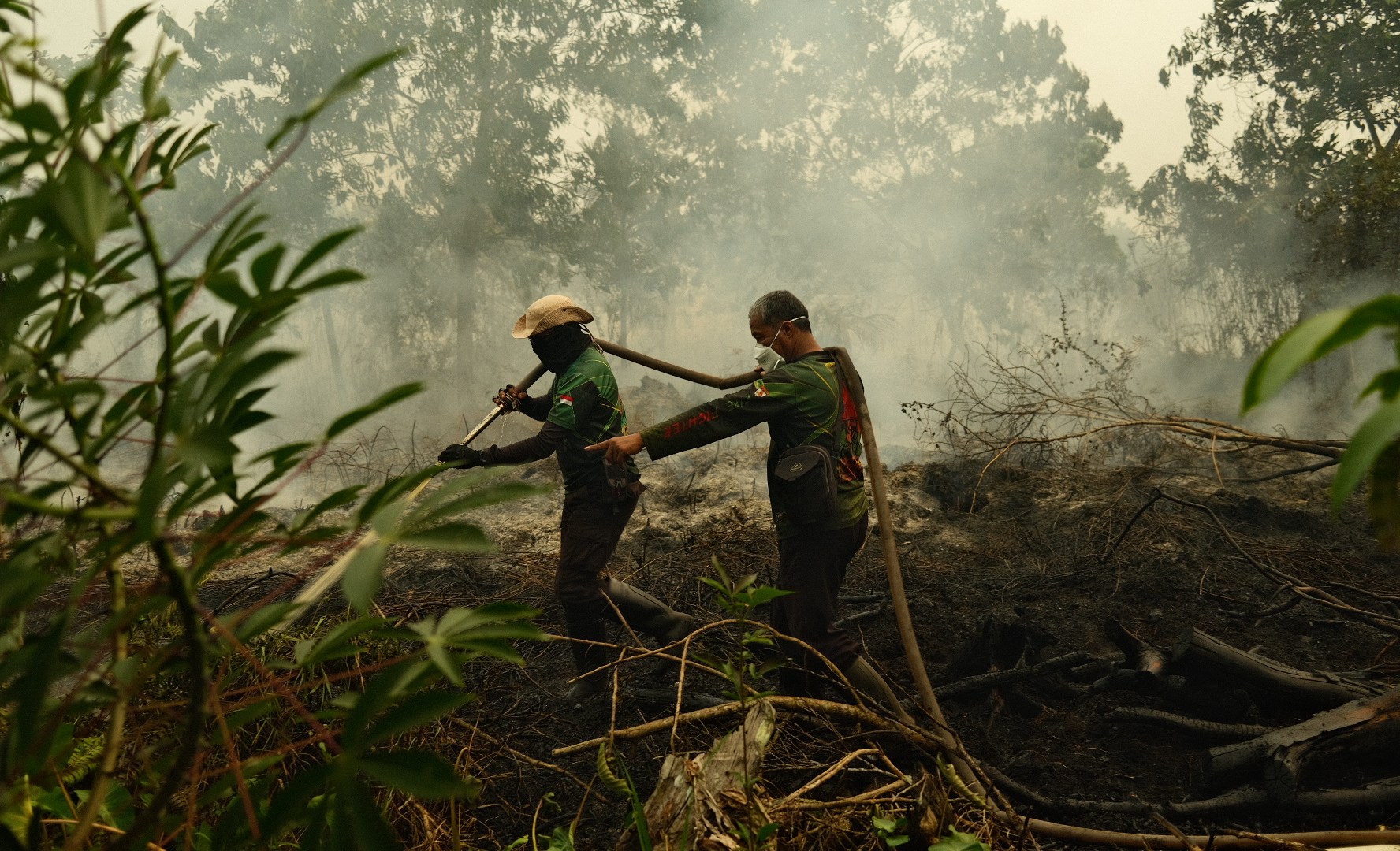
Kathmandu— Wildfires burning across Indonesia for over a month have forced schools to close, sent thousands seeking medical treatment for smoke inhalation, and left communities grappling with unprecedented levels of ash and haze. Residents of West Kalimantan province report the current situation is more severe than in recent years, as fires spread through dried-up peatlands impacting Sumatra, Kalimantan, Sulawesi, Java, and Papua. The Indonesian government has deployed significant resources to combat the blazes, but volunteer firefighters are struggling with limited equipment and worsening conditions.
Worsening Conditions Prompt Evacuations
Salma, a resident of Kubu Raya in West Kalimantan, described experiencing fires unlike any she’s seen in her 15 years living there. “I was scared, I was afraid that I would be burned by such a big fire,” she said, explaining she evacuated her home as the flames approached. She expressed relief that firefighters arrived quickly to prevent total destruction of her property.
Firefighters Face Resource Challenges
Volunteer firefighter Anas Dwi Wahyu Kurniawan described the situation as “very serious”, noting the scale of this year’s fires is comparable to those in 2016. He highlighted significant challenges faced by emergency crews, including water shortages and limited visibility due to heavy haze. Kurniawan also detailed a lack of adequate personal protective equipment and essential supplies like portable oxygen, complicating efforts to extinguish the blazes. “With water sources far away and inadequate equipment,” he said, “I think the situation will continue for some time unless there is a change in the weather.”
Health Impacts Mount Across Affected Regions
The fires are having a significant impact on public health, with doctors reporting a surge in patients presenting with respiratory issues. Dr Muhammad Arief Trihapsoro at the Sungai Durian Health Clinic said he sees between 50 and 70 people daily complaining of coughs and sore throats. He expressed concern about conditions like bronchitis and the long-term risks of prolonged exposure to air pollution, including stroke and heart disease. Pregnant women and children are particularly vulnerable.
Families Struggle with Persistent Illness
Siti Zahra, a mother of two in Kubu Raya, described her frustration as her children repeatedly fall ill due to the smoke and ash. “They have been sick for two days, but before that they were also sick for three days, then they got sick again,” she said. She explained that ash permeates homes despite constant cleaning efforts. Zahra has largely confined her children indoors, fearing further exposure and worrying about the long-term consequences of the pollution on their health.
Government Response Underway
President Prabowo Subianto announced Tuesday that the government is deploying dozens of helicopters, aircraft, water pumps, and thousands of personnel to fight the fires. Indonesia’s Health Ministry reports 3.4 million people are at risk of respiratory infections and has distributed over 260,000 face masks to residents in the hardest-hit areas.
The situation remains critical as emergency crews continue battling wildfires across multiple Indonesian islands, with concerns growing about the long-term health impacts on vulnerable populations. Authorities hope a change in weather patterns will aid firefighting efforts.
(With inputs from Al Jazeera)
Originally published on abcnews.com.np.



प्रतिक्रिया दिनुहोस्