

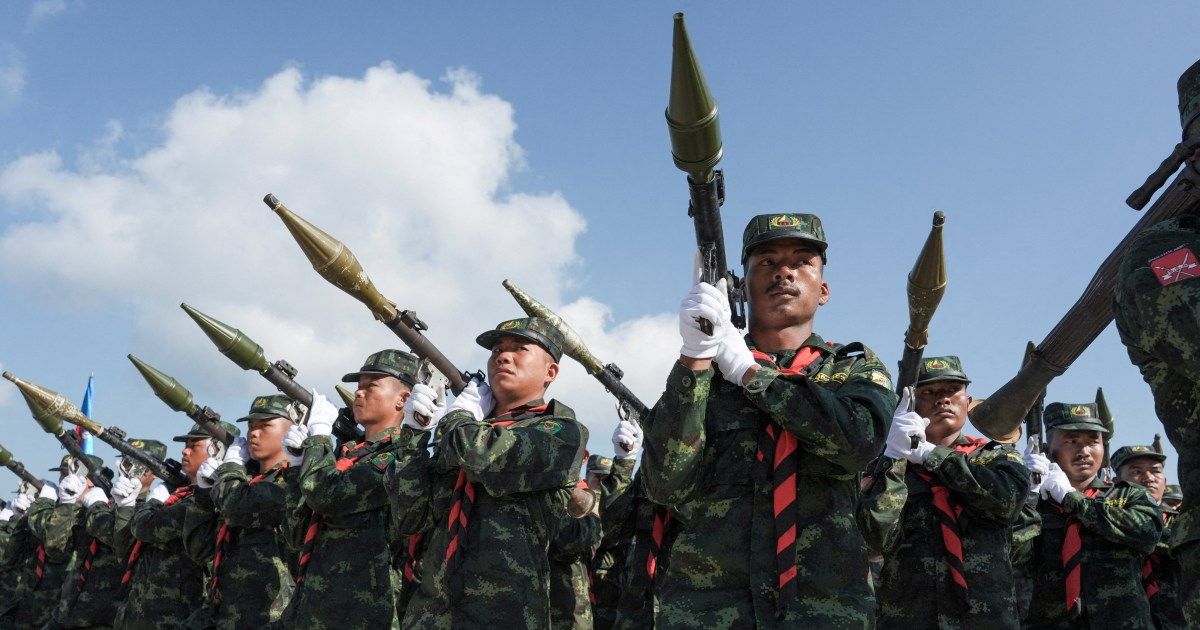
Kathmandu— In Myanmar, rebel groups are losing control of strategically important towns after enduring intense assaults by the country’s military. The recent setbacks for opposition forces—who seized territory in 2023 and 2024 following a 2021 coup—are attributed to a mass conscription drive that has bolstered troop numbers, relentless air strikes causing significant civilian casualties, and backing from China, which has brokered ceasefires with some ethnic armed groups while restricting weapons supplies to others. The fighting, now in its fifth year, began after a brutal crackdown on pro-democracy protesters and has resulted in over 100,000 deaths and displaced nearly four million people.
Strategic Losses in Chin State
Rebel fighters abandoned the town of Falam in April, citing a lack of ammunition after a six-month assault that included more than 2,500 air strikes and a ground offensive by approximately 1,000 troops. The loss of Falam—the only town in Chin State with an airport and a key trade route to India—represented a significant strategic victory for the military. Within weeks, three additional towns in Chin fell under military control, giving them command over the entire northern part of the state. Salai William Chin, a member of the rebel Chin Brotherhood, acknowledged the challenges of holding captured territory, emphasizing the need for manpower, logistics, and the ability to withstand sustained aerial attacks.
Shifting Dynamics of the Conflict
Analysts point to several factors driving the recent shift in momentum. A mass conscription drive has added tens of thousands of troops to the military’s ranks, while a devastating air campaign has resulted in hundreds of civilian deaths. Furthermore, China's involvement—brokering ceasefires and limiting weapons supplies—has weakened the opposition. Despite these gains for the military, Su Mon, an analyst at the Armed Conflict Location and Event Data (ACLED) project, believes they are unlikely to achieve a decisive victory, predicting instead a protracted war of attrition and worsening humanitarian crisis. The conflict began in February 2021 following a coup and subsequent crackdown on protesters who formed militias known as the People’s Defence Forces (PDF), aided by established ethnic armed organizations.
Military Gains and Opposition Response
The military has retaken 22 of the 101 towns it lost since the coup, including strategically important locations along key trade corridors. These gains have disrupted rebel logistics and hindered coordination, pushing opposition groups towards defensive guerrilla warfare. Senior General Min Aung Hlaing, who led the 2021 power grab and was recently sworn in as president after tightly controlled elections, has called for peace talks with armed opponents, but fighting continues. Despite these setbacks, opposition forces remain resolute, focusing on organizing, building support, and adapting to the military’s advantages.
Airpower and Chinese Influence
The Myanmar military's air superiority has proven crucial throughout the conflict, enabling troop resupply and devastating attacks against opposition forces. The Myanmar Internet Project documented 520 air strikes between April and June, resulting in at least 314 civilian deaths, with Chin State being particularly hard hit. Close to 150,000 troops have been added through conscription since 2024, while pressure from China has led two powerful opposition forces to withdraw from the fight and restricted ammunition supplies nationwide. Anthony Davis, a Bangkok-based security analyst, noted that unchallenged airpower, combined with drone technology and improved battlefield coordination, has significantly boosted the military’s capabilities.
Despite recent gains by the military, opposition groups insist the war is not lost and continue to organize and adapt their strategies. The conflict remains ongoing, with a mounting humanitarian crisis and no immediate resolution in sight.
(With inputs from Al Jazeera)
Originally published on abcnews.com.np.


प्रतिक्रिया दिनुहोस्