

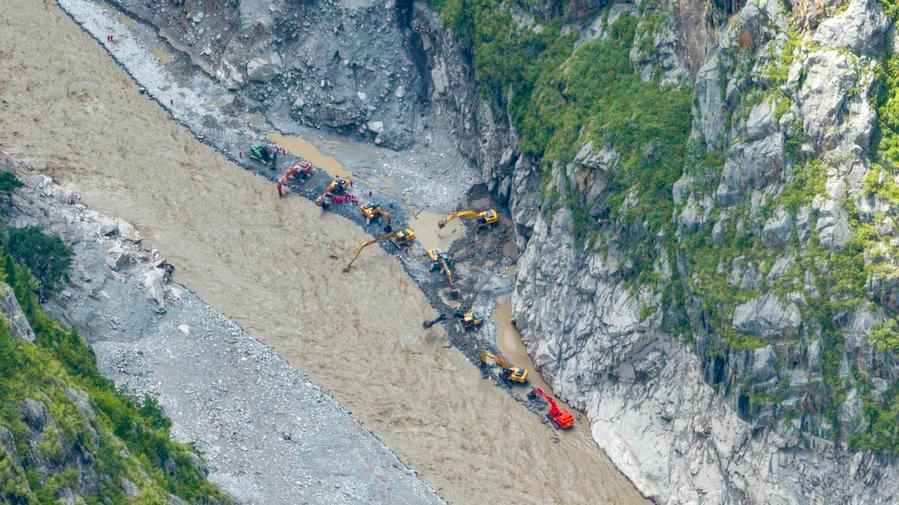
Kathmandu— China has launched a multi-pronged rescue mission involving more than 2,300 emergency personnel following a deadly mudslide that struck Gyirong Port on August 26. The disaster, triggered by a high-altitude glacier collapse in Nepal, left at least 21 people dead and 541 others missing. Rescuers faced significant challenges due to cut-off road access, adverse weather conditions, and the risk of secondary disasters.
Challenging Terrain
Rescue teams had to trek through thick mud for several kilometers carrying heavy loads after a key national highway was destroyed. Firefighters mobilized from Gyirong town faced damaged roads and blocked paths, forcing them to wade through muddy water and navigate treacherous terrain. Veteran rescuer Huo Jianxin described the disaster as complex and ever-changing, with teams relying on ropes to pass steep cliffs.
Restoring Road Access
The restoration of G216 national highway was crucial for bringing in more rescue teams and machinery. The repair work faced challenges such as limited working space, strong river currents, and risks from rain, rockfalls, and landslides. Crews adapted by using the river to separate usable material from debris and employing AI-enabled laser video monitoring systems to guard against potential hazards.
International Support
China has also extended support to Nepal in its emergency response efforts following the disaster. The first batch of 50 tonnes of relief supplies arrived in Kathmandu, with additional assistance including water purification equipment and DNA experts for victim identification. China is preparing a third batch of emergency relief supplies and stands ready to send more aid based on Nepal's needs.
(With inputs from Xinhua)
More from the source


Originally published on abcnews.com.np.






प्रतिक्रिया दिनुहोस्