

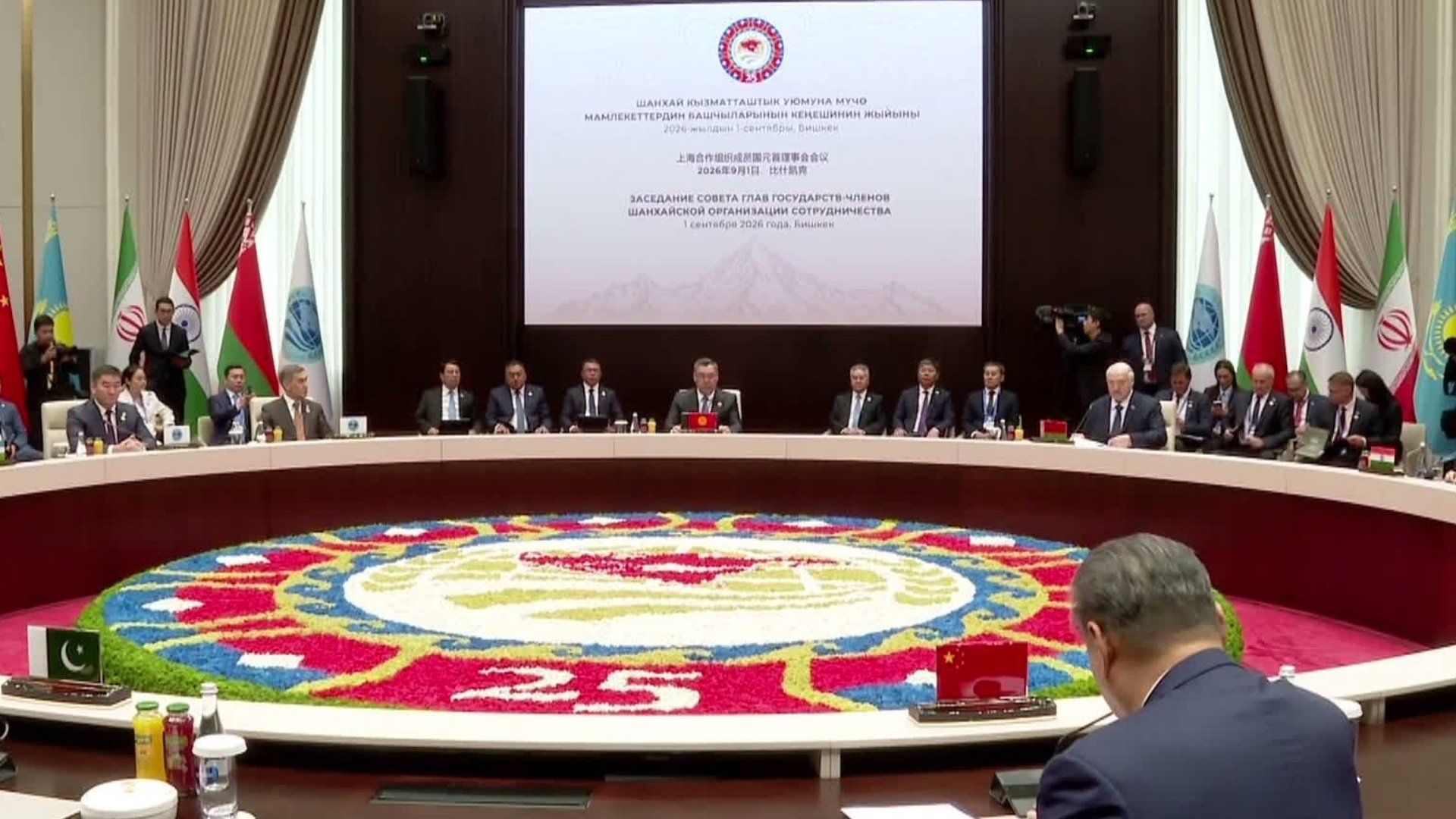
Kathmandu— Kyrgyzstan hosted a pivotal summit of the Shanghai Cooperation Organisation (SCO) on Friday, bringing together leaders from Russia, China, India, Iran, Pakistan, Turkey, and the United Nations Secretary-General Antonio Guterres. The event highlights Kyrgyzstan's strategic position in balancing relations with major global powers while leveraging its geography for economic and political opportunities.
SCO Summit Significance
Russian President Vladimir Putin emphasized that over the past 25 years, the SCO has evolved into an influential center of a multipolar world. The summit underscores Kyrgyzstan's role in balancing between giants like Russia and China while maintaining ties with Europe and the United States. Shairbek Dzhuraev from Crossroads Central Asia noted that the summit brings together key geopolitical players involved in current global conflicts.
Geopolitical Balancing Act
Kyrgyzstan's multi-vector foreign policy involves keeping Russia close, building ties with China, and maintaining open doors to Europe and the United States. This approach is driven by Kyrgyzstan’s dependence on transport corridors and imported energy, as well as its exposure to external economic shocks. Dzhuraev highlighted that Kyrgyzstan's biggest weakness lies in its dependence on transport routes, energy, and economic relationships.
SCO's Role in Global Order
The SCO is increasingly seen as a counterweight to US influence, with China and Russia advancing a different vision of the global order. However, the organization’s diverse membership means it cannot be viewed as a unified anti-American bloc. Iran's presence at the summit underscores its diplomatic challenges with Washington, with Iranian President Masoud Pezeshkian calling for reciprocal action from the United States.
Economic Implications of Sanctions
Sanctions against Iran and Russia have economic implications for Central Asian countries like Kyrgyzstan. Dzhuraev expressed skepticism about full compliance with sanctions, noting that China and other SCO members reject unilateral sanctions. The enforcement of these sanctions is particularly challenging in a region built around cross-border trade.
Kyrgyzstan's Economic Growth
Kyrgyzstan has seen rapid economic growth driven by transit trade, rising wages, and increased exports. However, this growth is largely dependent on external factors such as the Russia-Ukraine war and Chinese investment. The challenge for Kyrgyzstan is to develop productive sectors that can sustain long-term growth beyond these external drivers.
Kyrgyzstan's strategic position at the SCO summit highlights its efforts to leverage geopolitical tensions for economic opportunities, but also raises questions about sustaining this growth in a changing global landscape.
(With inputs from Al Jazeera)
More from the source

Originally published on abcnews.com.np.





प्रतिक्रिया दिनुहोस्