

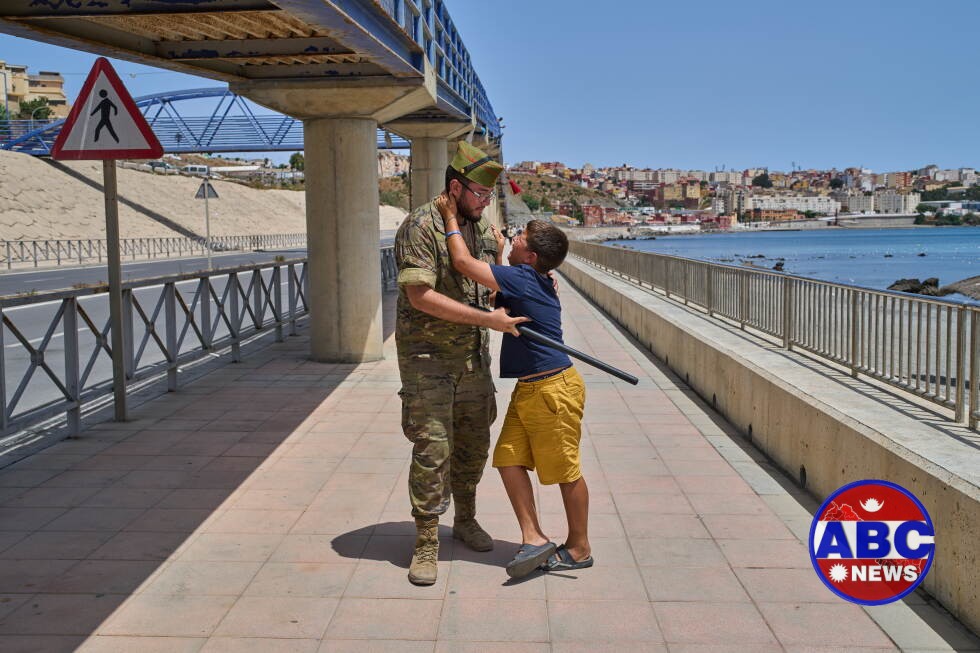
Kathmandu— After thousands of migrants crossed into Spain’s North African enclave of Ceuta from Morocco, hundreds of unaccompanied children are now stranded and facing an uncertain future. Many families have been separated during the chaotic crossing, with some losing loved ones to drowning or other dangers. Spanish authorities report that over 800 minors remain in Ceuta, while local officials say food is scarce and shelters are full.
Tragic Stories of Separation
A teenage girl from Tangier recounted her harrowing journey to an Associated Press photojournalist. She described how she managed to swim around the border fence with her family but lost her younger brother in the chaos, who drowned in the Mediterranean Sea. Her mother also disappeared during the crossing. The teenager spent four days alone after being separated from her family and sought help at a government-run youth center, only to find it was full. She now sleeps on the streets of Ceuta, begging for food.
The plight of this girl is not unique; many other minors are in similar situations, having been left behind or separated from their families during the mass migration attempt.
Legal and Humanitarian Obligations
Spanish law mandates that unaccompanied migrant children must be provided with protection and care. However, local officials report that shelters are overwhelmed and food is scarce among the migrants. An AP journalist witnessed a Spanish soldier attempting to return an unaccompanied Moroccan boy to Morocco but was stopped by local residents who insisted he was a minor. The lieutenant colonel then transferred the boy to the Spanish Civil Guard.
Local migration activist Ramsés Mohamed Azumik of Asociación Elín described the strategy as forcing migrants to leave due to hunger, thirst, and exhaustion.
(With inputs from AP)
Originally published on abcnews.com.np.





प्रतिक्रिया दिनुहोस्