

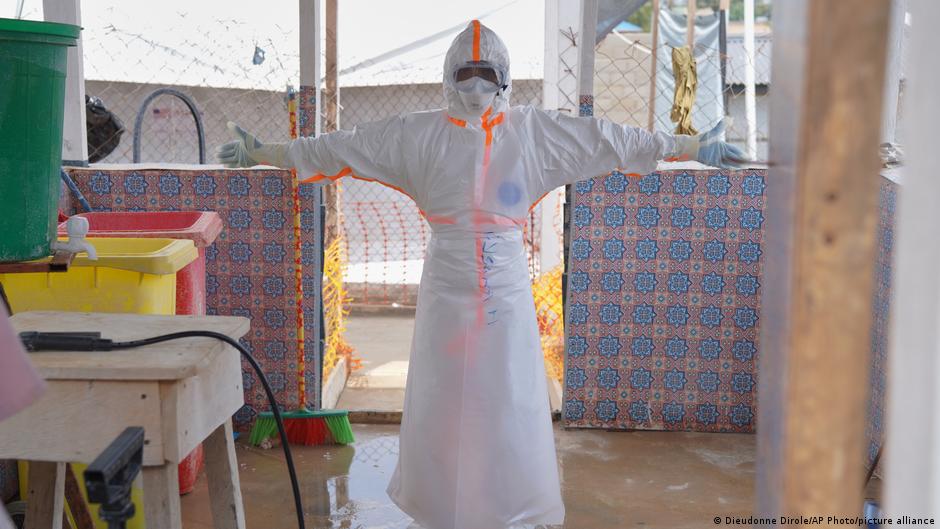
Kathmandu— An ongoing Ebola outbreak in the Democratic Republic of Congo (DRC) has claimed more than 2,000 lives and infected over 4,380 people since it was first confirmed earlier this year, according to health authorities who reported on Tuesday that the pace of deaths is increasing rapidly. The current outbreak, driven by a particularly virulent strain of the Bundibugyo Ebola virus, began with likely transmissions in February but was officially declared on May 15th and is now surpassing previous outbreaks in both infection rate and mortality. Limited vaccine availability for this specific strain, coupled with logistical challenges stemming from ongoing conflict and infrastructure issues, are hindering containment efforts.
Escalating Crisis
The current outbreak marks the 17th recorded in the DRC, raising concerns it could exceed the scale of the 2018-2020 outbreak which resulted in 2,300 deaths from approximately 3,500 infections. The virus is spreading faster and proving more deadly than the devastating West African outbreak of 2014-2016, which saw 28,000 infections and over 11,000 fatalities. Health officials reported reaching 1,000 deaths after nine weeks; that number has doubled in just three weeks.
High Fatality Rate & Limited Vaccine Access
The case fatality rate for the current outbreak stands at 45.9%, exceeding the 39.6% seen during the West African epidemic. A key challenge is the lack of approved vaccines specifically targeting the Bundibugyo strain, which is spreading faster than authorities can track. While vaccines exist for other Ebola strains, their effectiveness against this particular variant remains unproven.
Logistical and Security Hurdles
Health authorities are facing significant logistical difficulties in responding to the outbreak due to the volatile security situation within the DRC. Poor road conditions, ongoing rebel violence, coupled with healthcare worker strikes and pay issues, impede efforts to monitor the illness and deliver aid. “We haven’t reached the peak yet,” said Health Minister Samuel Roger Kamba in a recent interview. “Within the next three months, we expect to have already brought the spread under control and to start seeing it decline.”
Tracing Contacts & Potential Mutation
The World Health Organization (WHO) has noted that authorities are struggling to keep pace with the virus’s spread, stating they are “chasing the virus… the virus is ahead of us.” Jean Kaseya, head of the Africa CDC, warned last week that tracing contacts of confirmed patients is falling short of WHO targets – less than 95% of potential contacts are being tracked. Researchers suspect the Bundibugyo strain may have mutated from previous outbreaks in 2007 and 2012, originating with animal-to-human transmission.
Clinical trials for antiviral treatments began in early July, and the WHO recently recommended a full-scale human trial of the Ervebo vaccine, despite its unproven efficacy against this strain. Gavi, the vaccine alliance, has made 500,000 doses available for the trial.
(With inputs from DW)
Originally published on abcnews.com.np.





प्रतिक्रिया दिनुहोस्