

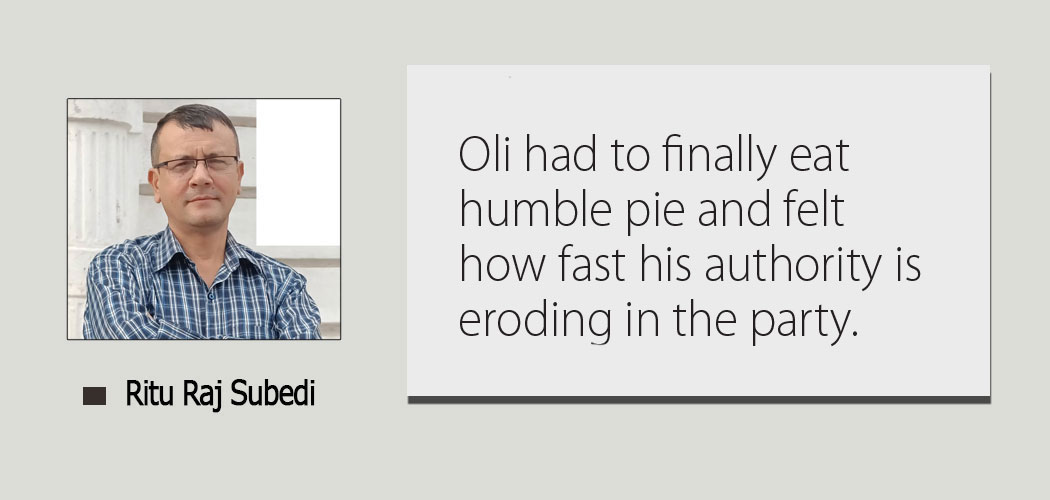
Kathmandu— Nepal's Communist Party of Nepal – Unified Marxist–Leninist (CPN-UML) is experiencing significant internal turmoil as younger members push for leadership change following disappointing results in the March 5th general elections. The party, once led by KP Sharma Oli, now faces a revolt from within, with calls for restructuring and accusations of outdated leadership hindering its ability to connect with new generations. This crisis comes amidst broader struggles within Nepal’s major political parties to adapt to evolving demographics and address demands for generational change, creating instability at both the central and provincial levels.
Generational Shift Challenges Established Leaders
Both the Nepali Congress and CPN-UML are currently facing internal challenges stemming from a revolt led by Gen Z members. The Nepali Congress attempted to bridge the intergenerational gap through a special convention, but efforts were undermined by established leaders resisting change. In contrast, the situation within left parties is described as chaotic, with older figures refusing to cede power to younger generations and instead forming alliances to maintain their positions. This resistance has led to coalition governments at the provincial level, primarily aimed at preserving political relevance.
Oli’s Authority Erodes Amidst Provincial Disputes
Former Prime Minister KP Oli is facing increasing humiliation and a loss of authority within the CPN-UML as he attempts to exert control over party appointments. Attempts to install loyalists as Chief Ministers in Bagmati and Koshi Provinces met with resistance, most notably from Hikmat Kumar Karki in Koshi Province, who defied instructions to resign despite pressure from Oli. While Oli succeeded in appointing Kiran Thapa Magar in Bagmati, reports surfaced of a heated exchange with Jagannath Thapaliya, the former provincial leader, allegedly resulting in a physical collapse during a rebuke over failing to secure support for the government.
Derogatory Language Fuels Internal Division
Chairman Oli has further inflamed tensions within the party by publicly referring to his own functionaries as ‘awara’ (loafers) and ‘kirna’ (ticks). This use of offensive language, a departure from traditional communist rhetoric, has drawn strong criticism from party members. During a recent meeting in Jhapa district, Oli also labeled critics as ‘sadakchhap’ (street thugs), questioning their party membership and accusing them of indiscipline. These remarks followed the submission of a report by a party task force urging him to step down and reorganize the party, prompting the launch of an ‘Awara Campaign’ by UML’s Intellectual Council in response.
Membership Decline Signals Broader Disengagement
The CPN-UML is also facing a concerning decline in membership renewal. Reports indicate that only approximately 53 percent of organized members have renewed their affiliations, with roughly 359,000 out of 686,700 members completing the process by mid-August. This drop in participation suggests waning support, particularly among younger members who feel excluded from leadership positions. Party officials recognize that this dwindling membership base poses a significant threat to the party’s long-term viability and underscores the urgency for restructuring.
Key Allies Distance Themselves From Oli
Oli's position is further weakened by the growing distance between him and key allies, including vice-chairs Bishnu Paudel and Prithvi Subba Gurung, and general secretary Shankar Pokharel. Pokharel, who previously defended Oli’s decisions, now advocates for a special convention to amend the party statute and facilitate leadership change, acknowledging that the party has lost support at the grassroots level. The task force report he supported reflects an admission of past missteps and deviations.
The internal divisions within CPN-UML are likely to intensify as pressure mounts on Oli to relinquish his position and allow for a restructuring of the party. The coming months will be crucial in determining whether the UML can successfully navigate this crisis and regain its footing in Nepali politics.
(With inputs from RN)
Originally published on abcnews.com.np.


प्रतिक्रिया दिनुहोस्