

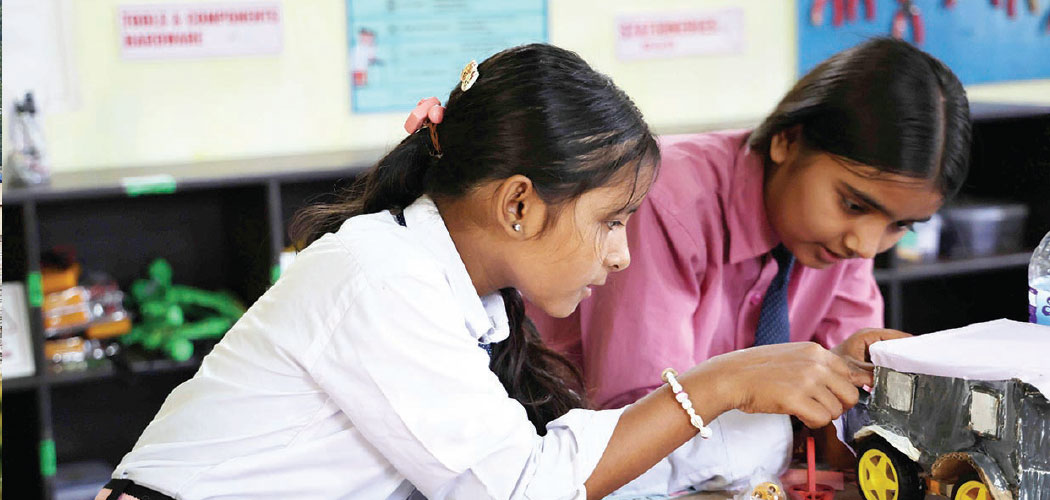
Kathmandu— Efforts are underway to modernize education for children in Nepal’s Madhes Province through the introduction of digital technology, problem-solving exercises, and practical skill development. The five-year INSPIRE project, a partnership between Save the Children Nepal and the Korea International Cooperation Agency (KOICA), is integrating these practices into community schools across Bara and Mahottari districts to better prepare students for future opportunities. A recent event in Kathmandu marked the completion of the project’s first year, showcasing its initial successes and outlining plans for continued expansion.
Tech Labs and Maker Spaces Established
The INSPIRE project has established technology labs and maker spaces in seven secondary schools within Bara district. These facilities are equipped with computers, smart boards, alternative power systems, and electronic materials, providing students with hands-on learning opportunities. Students are utilizing these resources to explore drone technology for agricultural monitoring and employ 3D printers to transform their ideas into tangible prototypes.
The initiative focuses not only on technical proficiency but also on fostering creativity and problem-solving skills through the application of technology.
Holistic Approach to Education
Beyond digital literacy, the INSPIRE project is committed to improving overall educational quality. This includes providing teacher training, support for students facing learning challenges, home-based learning resources, school attendance monitoring, scholarship programs, and vocational skill development opportunities for adolescents and young people.
The project also recognizes the importance of parental involvement, offering information and support to caregivers in Mahottari district on how to facilitate their children’s learning at home. By connecting schools, families, and communities, INSPIRE aims to ensure continuity in students' educational journeys.
Partnerships Driving Progress
Tara Chhetri, Country Director of Save the Children Nepal and Bhutan, emphasized that maker spaces are designed as environments where children can experiment, learn from their mistakes, and iterate on their ideas. She noted that experience-based learning cultivates critical thinking, creativity, and confidence while increasing student engagement.
Mooheon Kong, KOICA Nepal country director, highlighted the need to integrate quality education, digital transformation, and future employment skills to advance education in response to evolving global demands. Joon Oh, Board Chair of Save the Children Korea, stated that the first year of the INSPIRE project demonstrated the power of partnerships in creating new opportunities for children.
Local Government Support
Upendra Prasad Yadav, Mayor of Mahagadhimai Municipality, observed that the introduction of technology has opened up new educational possibilities for students in community schools, encouraging them to ask questions and develop practical skills. Shankar Prasad Adhikari, Under-Secretary at the Ministry of Education and Sports, believes that investment at the basic level is crucial for achieving long-term improvements in education.
The INSPIRE project continues its implementation across five local levels in Bara and Mahottari districts, with ongoing efforts to expand access to digital learning resources and skills development programs for children and young people in Madhes Province.
(With inputs from RN)
Originally published on abcnews.com.np.




प्रतिक्रिया दिनुहोस्