

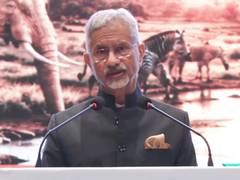
Kathmandu— External Affairs Minister S Jaishankar addressed the Africa Day celebrations in New Delhi, emphasizing the deep-rooted historical and ideological connections between India and the African continent. He noted that interactions between Indians and Africans date back millennia, driven by ancient monsoon winds that facilitated cultural exchanges and shared resistance against colonialism.
Ancient Connections
Jaishankar highlighted the historical ties between India and Africa, noting that interactions between the two regions have existed for thousands of years. He pointed to the monsoon winds as a natural bridge connecting the Indian subcontinent with Africa, facilitating not just trade but also cultural exchanges in philosophy, cuisine, and folklore.
Shared Struggle Against Colonialism
The minister emphasized the shared history of anti-colonial resistance between India and Africa. He noted that both regions stood together during the colonial era, fighting for freedom and human dignity. This solidarity was further strengthened by Mahatma Gandhi's experiences in South Africa, which influenced African leaders like Kwame Nkrumah, Julius Nyerere, and Nelson Mandela.
Post-Independence Solidarity
Jaishankar highlighted the post-independence era when both India and Africa transitioned into engaging as confident, sovereign partners. He noted that this period laid the foundation for South-South cooperation and celebrated the founding of the Organisation of African Unity in 1963, now known as the African Union.
Celebrating Contemporary Ties
In his concluding remarks, Jaishankar extended a warm welcome to 50 African diplomats visiting India for a specially curated training program at the Sushma Swaraj Institute of Foreign Service. This initiative underscores New Delhi's commitment to building contemporary diplomatic and capacity-building ties with Africa.
(With inputs from ANI)
Originally published on abcnews.com.np.




प्रतिक्रिया दिनुहोस्