

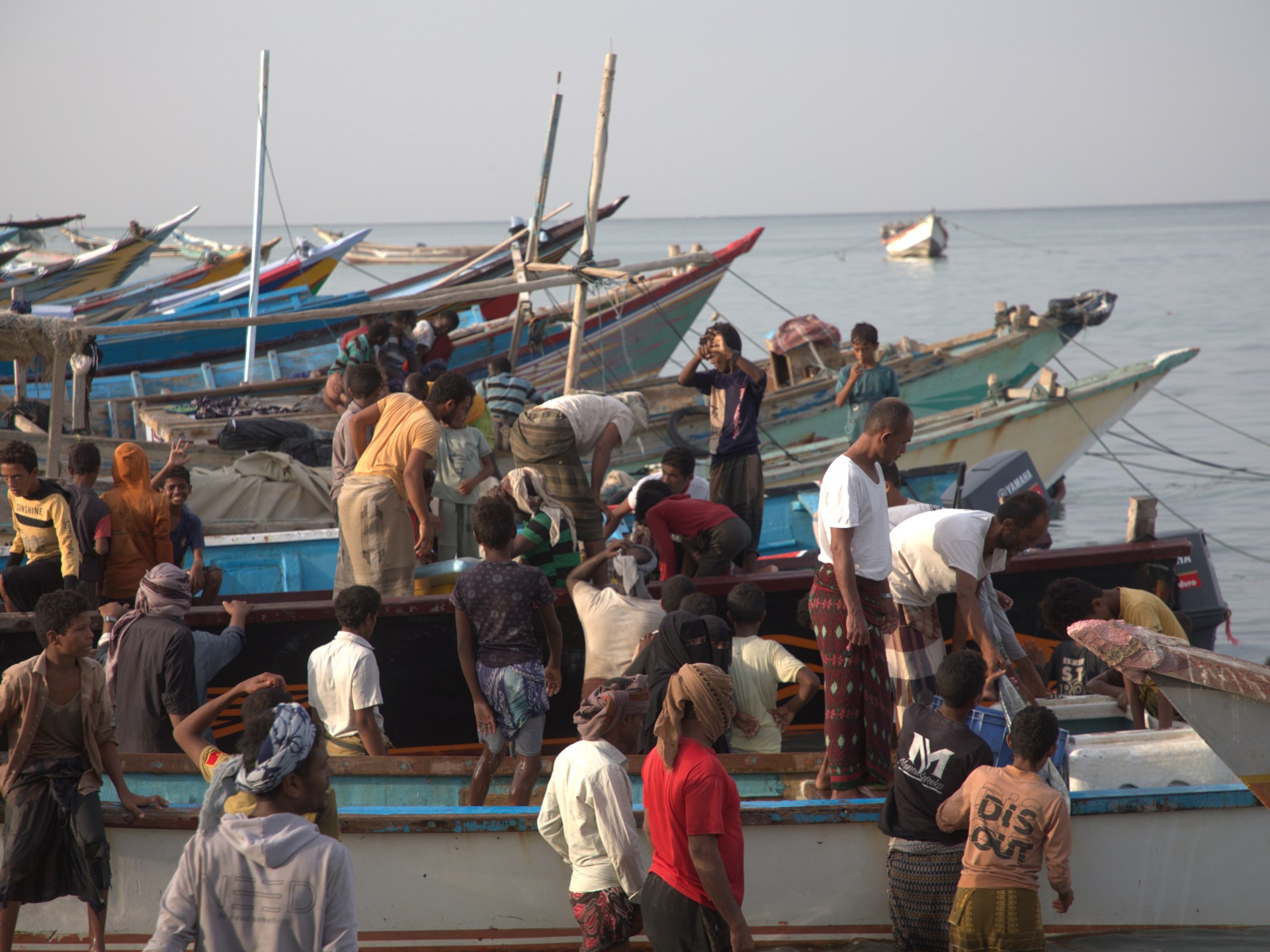
Kathmandu— For Mazhar, a fisherman based in Yemen’s port city of al-Makha, earning a living has become a deadly gamble since the outbreak of conflict in 2015. The Red Sea, once a thriving hub for Yemen's fishing industry—previously its second-largest export earner after oil—has transformed into a dangerous warzone due to ongoing fighting between Houthi rebels and pro-government forces, compounded by recent attacks on shipping following the start of Israel’s war on Gaza in October 2023. Fishermen now face restrictions on where they can sail, the threat of naval fire, and the ever-present danger of sea mines, leading many to abandon the trade altogether.
A Once-Thriving Industry Under Threat
Yemen’s Red Sea coast was a cornerstone of the country’s fishing industry before the war. However, fish exports from the region have plummeted by approximately 70 percent since 2018. The strategic importance of the area—home to the port of Hodeidah and the Bab al-Mandeb Strait—has made it a focal point for conflict, with both sides imposing restrictions on fishermen's access to traditional fishing grounds. Fouad Doubla, head of the Fishermen’s Association in al-Khawkhah, estimates that more than 30,000 fishermen are now struggling to provide for their families.
Naval Restrictions and Deadly Incidents
Fishermen report facing strict boundaries at sea enforced by both warring parties. Mazhar explained they resort to building artificial reefs with scrap materials, only to have access denied due to military operations. Recent incidents underscore the danger; a fishing boat in al-Khawkhah was recently fired upon, resulting in two fatalities, and numerous fishermen have gone missing without a trace. Akram recounted how a sea mine exploded under the boat of two neighbors near al-Khawkhah last year, highlighting the constant threat posed by unexploded ordnance.
Loss of Livelihoods and Forced Displacement
The escalating risks are driving fishermen to seek alternative livelihoods. Doubla stated that 113 fishermen have gone missing in the Red Sea since 2023, leaving their families without answers or support. He also noted that sea mines have killed 264 fishermen and injured 215 others. Many are choosing to leave the profession entirely; Akram plans to relocate to Aden, hoping for safer fishing grounds, while Ismail sold his fishing gear after two decades to purchase a minibus and provide for his family.
A Desperate Situation with Few Options
Despite the dangers, some fishermen like Mazhar feel they have no other choice but to continue risking their lives. “I’ve thought more than once about leaving this dangerous profession, but I have no alternative,” he said. Others face accusations of smuggling or aiding factions, further complicating an already precarious situation. The combination of naval warfare, sea mines, and restrictions on movement has created a desperate environment where fishermen are caught in the crossfire, bearing the brunt of a conflict they did not initiate.
As fighting continues in Yemen and the Red Sea remains a volatile area, the future for Yemeni fishermen appears bleak. Many have already been forced to abandon their traditional way of life, while those who remain face daily risks to provide for their families.
(With inputs from Al Jazeera)
Originally published on abcnews.com.np.





प्रतिक्रिया दिनुहोस्