

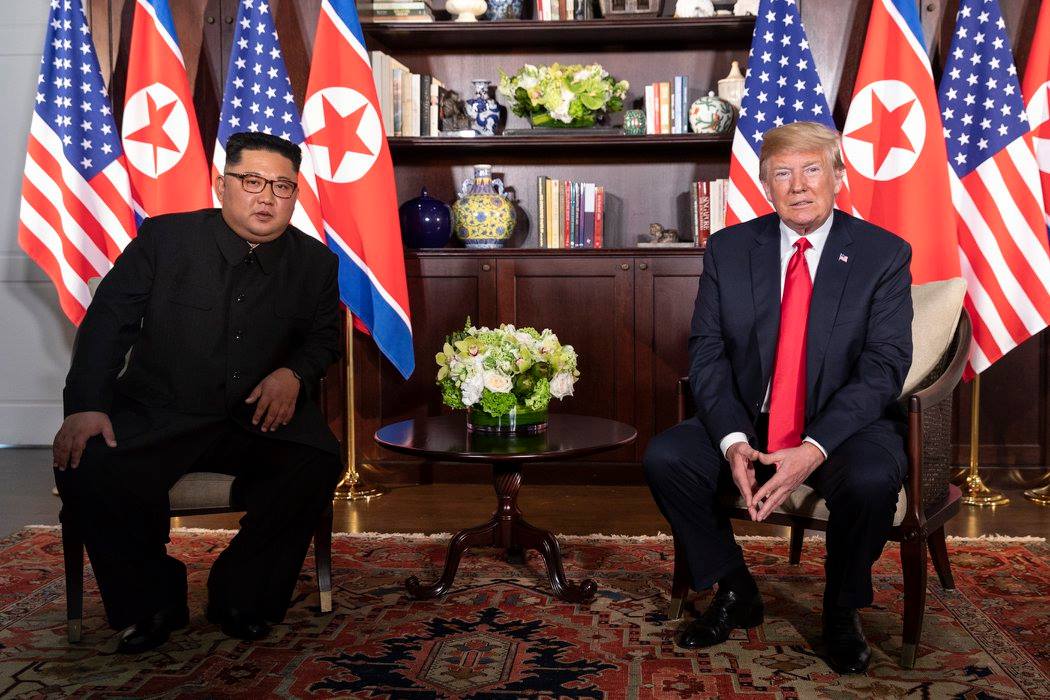
Kathmandu— Former President Donald Trump offered to reduce the scale of the annual Ulchi Freedom Shield military exercises conducted by US and South Korean forces as both a rebuke to Seoul for its stance on Iran and an overture to North Korea; however, Pyongyang rejected the gesture. While South Korea’s current administration welcomed the move—seeing it as aligned with their long-held goal of improved inter-Korean relations—North Korea deemed it insufficient, revealing a shift in geopolitical dynamics that diminishes US leverage.
South Korean Perspective
The Lee administration's Democratic Party has consistently sought to improve relations with North Korea, and reducing joint military exercises has long been considered a potential pathway towards this goal. South Korean administrations have historically avoided explicitly requesting such reductions from the United States for fear of domestic backlash from conservative factions. Therefore, when Trump announced the scaling down of the exercises, it was viewed by Seoul not as punishment, but as a welcome development.
Why North Korea Remained Unmoved
Several factors contributed to North Korea’s rejection of Trump's gesture. The last-minute nature of the decision—announced just one day prior to implementation—was perceived as insincere and lacking genuine intent. More fundamentally, Pyongyang views these military exercises not merely as routine drills but as a direct threat, given the vast disparity in military capabilities between North Korea and the combined forces of the United States and South Korea. As the Center for Strategic and International Studies has noted, such exercises could easily mask preparations for an actual attack.
Historical Grievances and Regional Shifts
North Korea’s sensitivity to these exercises stems from its historical experience during the Korean War, in which US forces inflicted widespread destruction—dropping more bombs on North Korea than across the entire Pacific Theater. The exercises also disrupt North Korean society, placing the nation on high alert and diverting resources from essential sectors like construction and industry. However, a key factor in Pyongyang’s current stance is its strengthening relationship with Russia and China. This ‘blood alliance,’ solidified by North Korean military support for Russia, has lessened the impact of US sanctions and reduced Washington's ability to exert pressure.
Trump’s Motives and Future Prospects
Facing domestic political challenges, including a contentious election campaign, Trump appears to be seeking positive publicity through this diplomatic maneuver. His long-term goal is reportedly to draw North Korea away from China’s sphere of influence. However, Pyongyang has little incentive to abandon its alliances with Russia and China in exchange for promises from the US—a nation with a history of broken commitments, including Trump's abrupt cancellation of negotiations with Kim Jong-un in 2019. Furthermore, any potential agreement would face hurdles in Congress and could be overturned by a future administration.
Path to Lasting Peace
Despite the current impasse, the possibility of future dialogue between Washington and Pyongyang remains open. North Korea prioritizes its independence and seeks relationships that do not compromise its sovereignty. Meaningful engagement with the US could offer greater autonomy, but lasting peace in Korea will require a broader regional settlement—specifically, dismantling what analysts describe as the ‘US San Francisco System’ of bilateral military alliances.
While the scaling down of military exercises was a positive step, it is insufficient to overcome decades of mistrust and historical grievances. The future of Korean peace remains contingent on wider geopolitical shifts and a fundamental restructuring of regional security arrangements.
(With inputs from CounterPunch)
Originally published on abcnews.com.np.

प्रतिक्रिया दिनुहोस्