

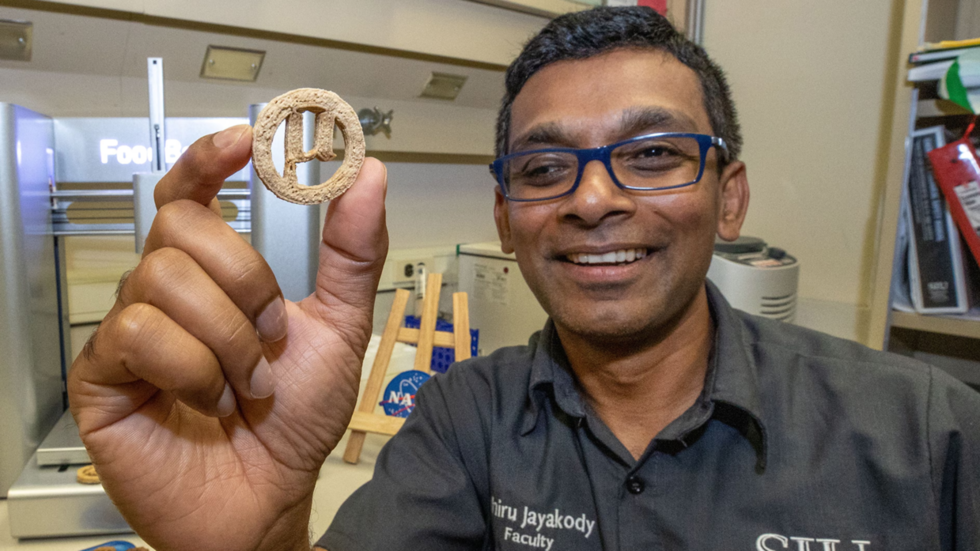
Kathmandu— Scientists at Southern Illinois University Carbondale (SIU) are pioneering a novel approach to address both plastic pollution and global food insecurity by transforming plastic waste and agricultural byproducts into edible, 3D-printed cookies. The project, which began in 2021, utilizes genetically engineered yeast to convert carbon from discarded materials into proteins, fats, and acids, offering a potential sustainable food source for challenging environments like space or disaster zones. Researchers have successfully created small protein-rich “µBites,” but are awaiting university approval to conduct taste tests. The development comes amid growing concerns about microplastic contamination of the human food chain.
From Waste to Protein
The team initially focused on finding uses for waste plastics, recognizing that both plastic and food share a common base element: carbon. Lahiru Jayakody, an associate professor of microbiology at SIU, explained this core concept in an interview with the American Chemical Society (ACS). The process involves breaking down plastic and plant waste using water and oxygen under high temperature and pressure. This creates compounds that genetically engineered yeasts then consume, producing essential proteins, fats, and acids.
The µBite Creation Process
Once the yeast has processed the waste materials, the resulting mixture is combined with fiber, starch, and a sweetener. This blend is then fed into a 3D printer, which molds the paste into cookies dubbed “µBites” or “microbites.” The technology allows for customization of shape and nutritional content, potentially tailoring food production to specific needs and environments. Jayakody envisions this being particularly useful in extreme conditions where traditional food sources are scarce.
Addressing Food Security in Extreme Environments
According to Jayakody, the technology could be invaluable in producing food in challenging locations. “If you want to produce food in a very extreme environment using the resource you have, carbon resource waste like Arctic, or the desert, and potentially one day in the Mars or the lunar surface, microbeids can do that job,” he told Reuters. This potential earned SIU researchers recognition from NASA’s Deep Space Food Challenge in 2021.
Growing Concerns About Plastic Contamination
The development of these protein-rich cookies arrives as scientists increasingly focus on the unintentional presence of plastics within the human food chain. Recent studies have detected microplastics and nanoplastics in various human tissues, including the liver, kidneys, brain, blood, placenta, and heart tissue. While research suggests potential health risks associated with exposure – such as inflammation and metabolic disruption – researchers emphasize that further investigation is needed to fully understand the long-term effects on humans.
Researchers are currently awaiting safety clearance from their university before conducting taste tests of the µBites. The team continues to refine the process, aiming for a sustainable solution to both plastic waste management and food production challenges.
(With inputs from RT)
Originally published on abcnews.com.np.






प्रतिक्रिया दिनुहोस्