

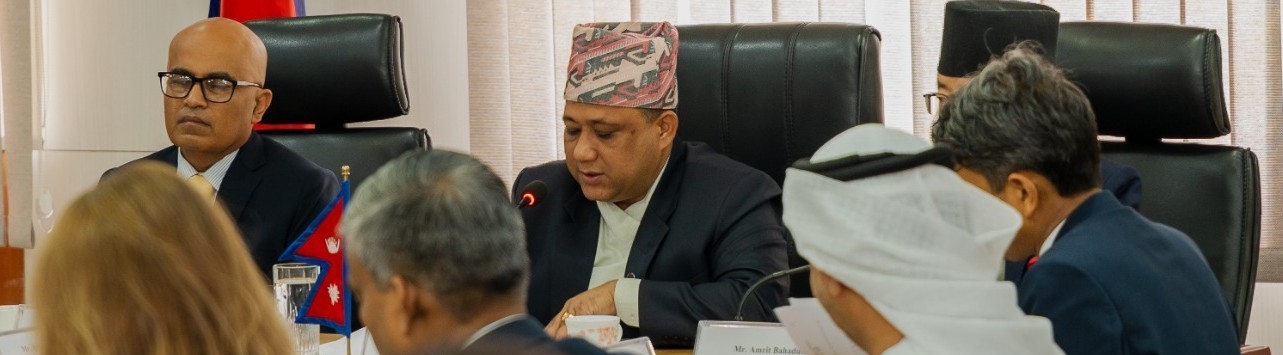
Kathmandu— Foreign Minister Shisir Khanal has emphasized that the recent Bhotekoshi disaster should be viewed as both an immediate humanitarian crisis and a sign of increasing climate risks in the Himalayan region. At a briefing for the diplomatic community based in Kathmandu, Khanal highlighted the vulnerability of mountain countries to rising temperatures and called for urgent action on climate justice and disaster preparedness.
Climate Risks in the Himalayas
Khanal stated that Nepal, despite making a negligible contribution to global emissions, faces significant impacts from a warming Himalayan region. He noted that the Bhotekoshi disaster had highlighted the particular risks faced by mountain countries and called for effective early-warning systems and disaster-resilient reconstruction. The Foreign Minister also mentioned that Nepal has been raising international awareness through initiatives such as the Sagarmatha Dialogue.
Impact of the Disaster
The Bhotekoshi River flood, which occurred in Rasuwa district on September 26, was described by Khanal as a 'Himalayan Tsunami.' The flood traveled through the Trishuli and Narayani river systems, affecting communities and infrastructure in parts of Rasuwa, Nuwakot, Dhading, Gorkha, and Chitwan. The death toll and number of missing individuals have been rising, with rescue operations proving challenging due to debris and mud.
Tourism and Safety
Despite the significant damage caused by the Bhotekoshi flood, Khanal emphasized that its impact was geographically limited. He assured that other parts of Nepal remained safe and fully open for visitors, with major tourist destinations such as Kathmandu, Pokhara, Chitwan, Lumbini, Janakpur, Annapurna region, Everest region, and Bardiya remaining accessible. Khanal stressed the importance of maintaining tourism during the disaster response period.
(With inputs from RN)
Originally published on abcnews.com.np.





प्रतिक्रिया दिनुहोस्