

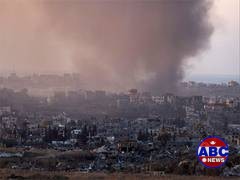
Kathmandu— On Tuesday, Israeli forces carried out an explosion in Haddatha, a southern Lebanese town near the border with Israel. This came as both nations began new rounds of talks in Rome to advance a framework for reducing hostilities along their shared boundary, following months of heightened military activity and tensions.
Negotiations Begin Amidst Tensions
The ongoing negotiations in Rome are part of US-mediated efforts to stabilize the Israel-Lebanon border after a period marked by increased hostilities. The talks aim to build upon a June framework agreement that would see Israeli forces gradually withdraw from southern Lebanon as Hezbollah disarms. However, the explosion in Haddatha underscores the continued challenges and risks involved in implementing such agreements.
Lebanese Prime Minister Nawaf Salam strongly condemned Israel's military actions, describing them as violations of the ceasefire, Lebanese sovereignty, and international law.
Recent Military Operations
In recent days, Israeli forces have been active in southern Lebanon. On August 1, the IDF announced it had dismantled several underground tunnels beneath the Beaufort Ridge during a limited operation inside what is considered Israel's security zone. The military stated that these tunnels served as a command center for Hezbollah’s Bader Unit and were used to direct attacks against Israeli troops and civilians over two decades.
The IDF alleged that Iran funded the construction of this extensive tunnel network, which was utilized to launch drones, explosive devices, and anti-tank missiles towards northern Israel. The military emphasized that these tunnels posed a significant threat due to their proximity to Metula and the Galilee Panhandle.
(With inputs from ANI)
Originally published on abcnews.com.np.





प्रतिक्रिया दिनुहोस्