

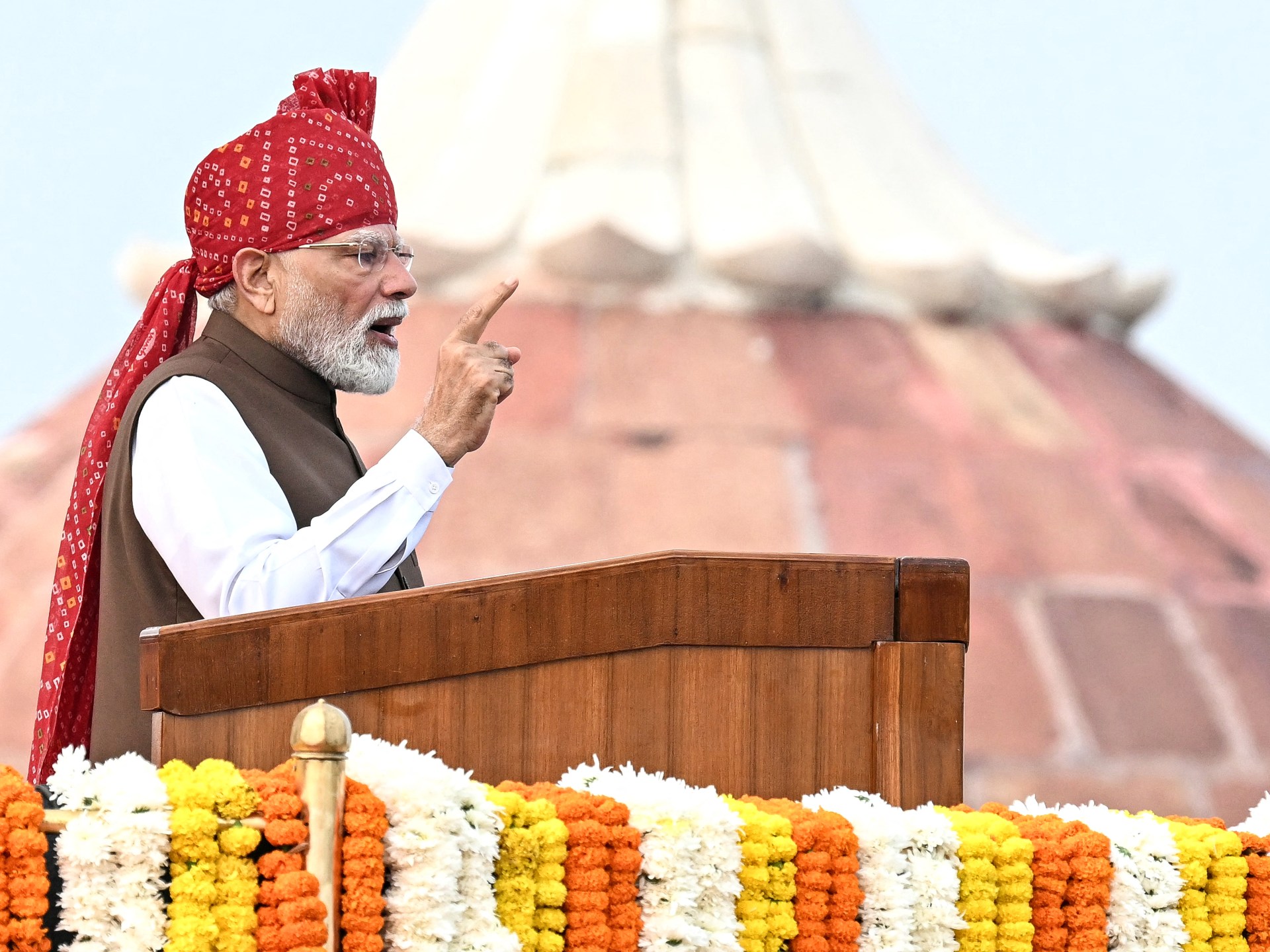
Kathmandu— Indian Prime Minister Narendra Modi stated that India has largely overcome a decades-long Maoist rebellion, known as the Naxalite movement, but warned of ongoing threats posed by its remaining ideological backers during his Independence Day speech on Saturday. He specifically referred to these supporters as “dimagi Naxals” – or ‘intellectual Naxals’ – and called for their identification and isolation. The remarks come amid recent youth-led protests and as Modi's government aims to transform India into a developed nation by 2047.
Decades of Insurgency
The Naxalite movement originated in 1967 with an uprising in the village of Naxalbari, eastern India, and evolved into a prolonged armed rebellion advocating for the rights of landless farmers, rural communities, and Indigenous populations. The conflict resulted in thousands of deaths among civilians, rebels, and security forces over several decades. Modi credited his government’s combined approach to security and development with significantly reducing Maoist violence since he assumed office in 2014.
Shifting Focus to Ideological Threat
While asserting the decline of armed Naxalites, Modi expressed concern about those he termed “intellectual Naxals,” echoing a previously used label – ‘urban Naxal’ – employed by his Bharatiya Janata Party against activists, academics, and critics. He suggested these individuals are seeking opportunities to incite violence and emphasized the need to identify and isolate them.
Recent Protests and Government Initiatives
The Prime Minister's speech followed weeks of protests led by a youth-led movement called the Cockroach Janta Party, which successfully prompted the resignation of his education minister. Though not directly mentioned in his address, Modi highlighted government initiatives geared towards young Indians, including training programs focused on artificial intelligence and free online coaching for competitive examinations. He also touted India’s economic transformation from a “fragile” state to one of the world's fastest-growing major economies.
Concerns Over Civil Society Restrictions
Rights groups have long alleged that Modi’s government has utilized anti-terror laws, sedition provisions, and regulations concerning foreign funding to restrict civil society organizations and target activists, journalists, and those critical of its policies. These concerns add context to the Prime Minister's recent warnings about ideological opponents.
Modi reaffirmed his government’s commitment to achieving developed nation status for India by 2047, marking a century since its independence.
(With inputs from Al Jazeera)
Originally published on abcnews.com.np.



प्रतिक्रिया दिनुहोस्