

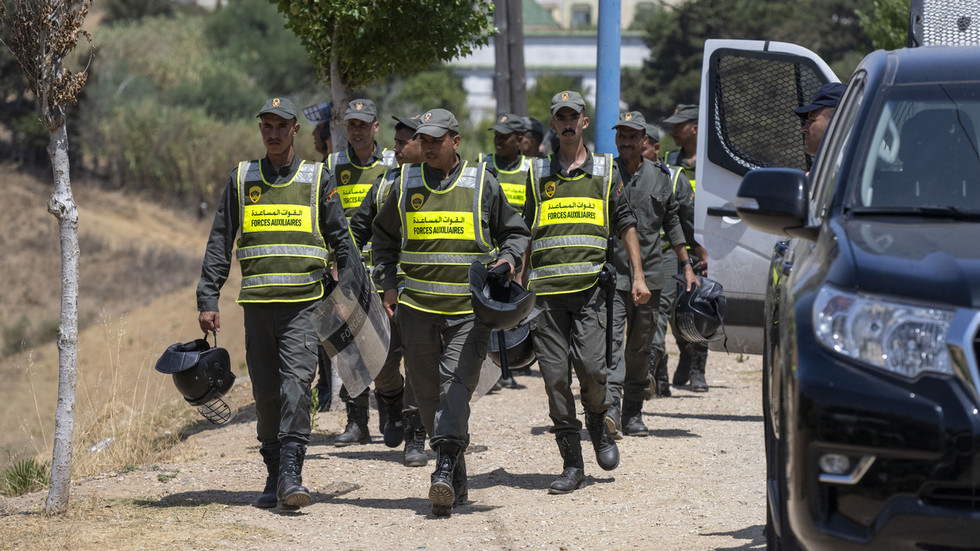
Kathmandu— Moroccan authorities detained at least 355 migrants near the Spanish enclave of Ceuta on Saturday, responding to online calls for a coordinated border crossing. The detentions included 294 migrants from Sub-Saharan Africa and 61 Moroccan citizens accused of facilitating the attempts, according to state broadcaster Medi 1 TV. Security forces used tear gas against groups gathering near the border as Spain deployed additional soldiers and police to Ceuta, following a similar surge in crossings last month that resulted in numerous deaths and reignited a long-standing sovereignty dispute between Madrid and Rabat.
Recent Border Surge and Fatalities
On July 30th, over 72,000 people crossed into Ceuta, overwhelming the enclave’s resources. Reports indicate that at least 100 individuals died while attempting to reach Spanish territory during this event. The recent surge follows a year in which more than 8,000 people entered Ceuta in 2021, an incident widely believed to be retaliation for Spain providing medical treatment to Brahim Ghali, the leader of the Polisario Front – a group advocating for Western Sahara’s independence from Morocco.
Sovereignty Dispute Between Spain and Morocco
Morocco has claimed sovereignty over Ceuta and Melilla since gaining independence in 1956. However, Spain considers these enclaves integral parts of its territory and rejects any discussion regarding their status. Moroccan Justice Minister Abdellatif Ouahbi stated on August 11th that Rabat had repeatedly raised the issue with Madrid, seeking a resolution through negotiations. Spanish Defense Minister Margarita Robles firmly responded that Ceuta and Melilla were Spanish and “cannot be touched,” a position echoed by Spain’s Foreign Ministry.
Security Response and Future Returns
Spain deployed over 500 additional police officers to Ceuta and established a maritime barrier following the July 30th surge. Approximately 5,000 migrants remain in the enclave, according to Spanish Interior Minister Fernando Grande-Marlaska. He stated that those without legal grounds to stay will be returned to Morocco and barred from traveling to mainland Spain, with exceptions made for particularly vulnerable cases. The Moroccan Interior Ministry also warned organizers and participants of the attempted crossings could face prosecution.
Moroccan authorities continue to monitor online activity related to potential border incursions, while Spain maintains a heightened security presence in Ceuta. The underlying sovereignty dispute between Madrid and Rabat remains unresolved.
(With inputs from RT)
Originally published on abcnews.com.np.




प्रतिक्रिया दिनुहोस्