

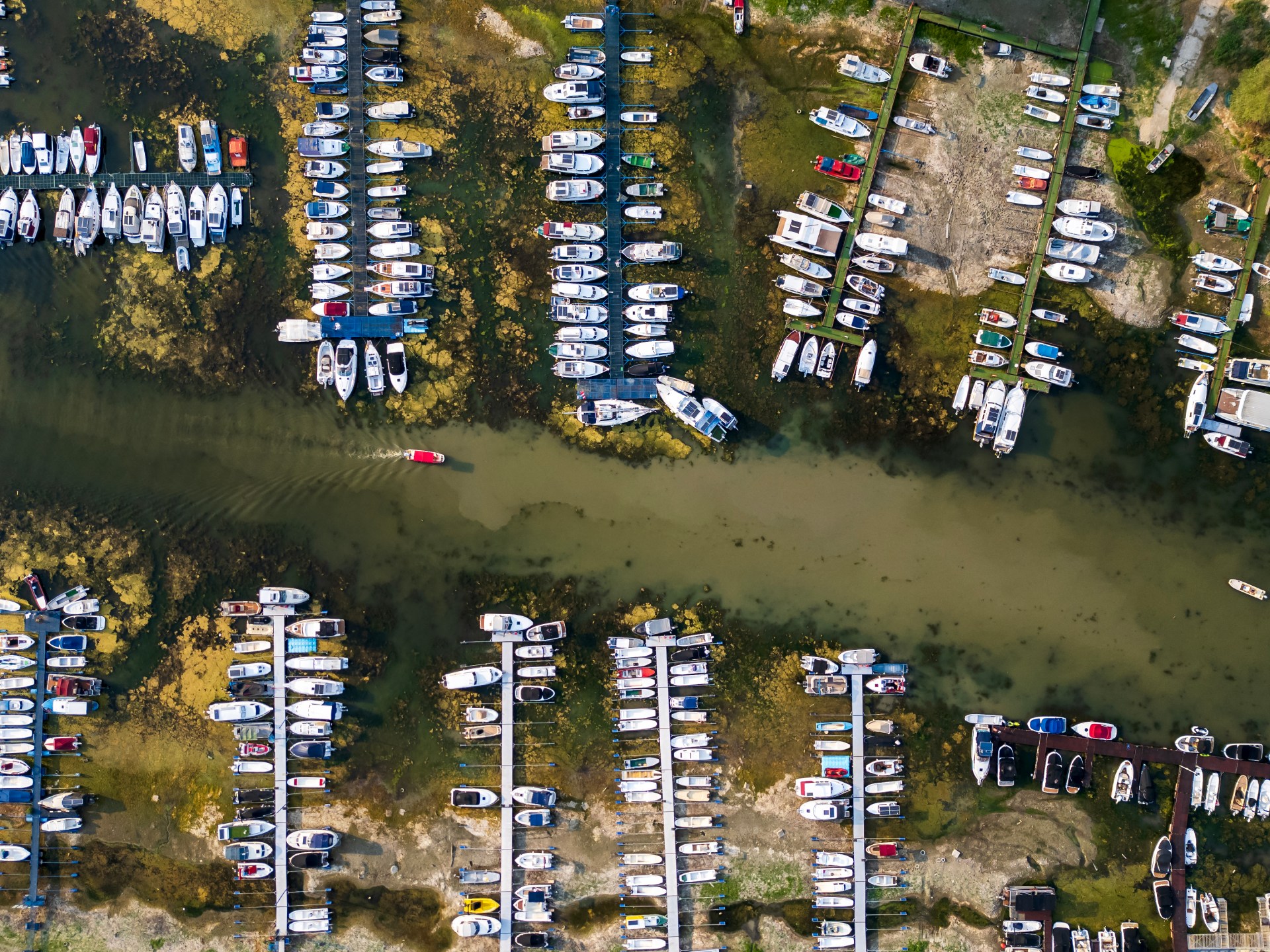
Kathmandu— Half of Europe is currently experiencing drought, leading to drastically reduced river levels across the continent. The Global Drought Observatory reports that Central and Western Europe are particularly affected, with southern England, northern Italy, and parts of Central Europe facing the most severe impacts. Satellite imagery analyzed by Al Jazeera’s Open Source Unit shows retreating water in major rivers, declining soil moisture, and widespread yellowing of vegetation in cities throughout the region, a situation exacerbated by continued hotter and drier conditions documented by the European Commission’s Joint Research Centre.
River Levels Reach Record Lows
The European Commission’s Joint Research Centre reported Wednesday that the Loire, Po, Rhine, and Danube rivers have all reached record-low levels. Analysis of satellite images reveals significant changes in these waterways; for example, comparisons of the Loire River near Saumur show wider islands and larger exposed sandy areas within the channel when comparing August 2023 to 2026 imagery. Similar declines are visible along the Garonne River in France, where early interventions to support river levels were initiated in July – the earliest such operation since 1993.
Agricultural and Industrial Impacts
The drought is not only impacting waterways but also agriculture and industry. Satellite images of the Po River near Boretto, Italy, show a decrease in water coverage and an increase in exposed areas, coinciding with severe hydrological stress in the basin and pressure on water use for irrigation and energy production. Along Germany’s Rhine River, falling water levels have disrupted shipping traffic, bringing it to a halt at key bottlenecks like Kaub, where vessels are operating with significantly reduced loads. The inland waterway transport sector has warned that commercial and tourist navigation could become impossible in affected areas.
Urban Green Spaces Deteriorate
The effects of the drought extend beyond rivers and agriculture, impacting urban green spaces as well. Satellite imagery captured visible changes across London’s Hyde Park and around Stonehenge, with significant declines in vegetation vitality. Vienna, Austria, also shows striking visual changes in parks like Auer-Welsbach Park, where grass has turned yellow and greenery has severely declined between July 2025 and 2026. England recorded its driest July since records began in 1836, with just 6.5mm of rainfall – only 10 percent of the long-term average.
Widespread Regional Effects
The Danube River is also experiencing declines along sections in Hungary and Romania, putting pressure on navigation, water supplies, agricultural activity, and the energy sector. The Combined Drought Indicator for mid-July shows that nine percent of Europe’s land area is at an alert level, including parts of southern Germany, Hungary, Romania, Austria, the Czech Republic, and Slovakia. These conditions are consistent with broader patterns documented by European monitoring centres, which expect dry conditions to persist through September.
European authorities continue to monitor the drought situation closely, anticipating that current conditions will likely extend into September and potentially beyond.
(With inputs from Al Jazeera)
Originally published on abcnews.com.np.





प्रतिक्रिया दिनुहोस्