

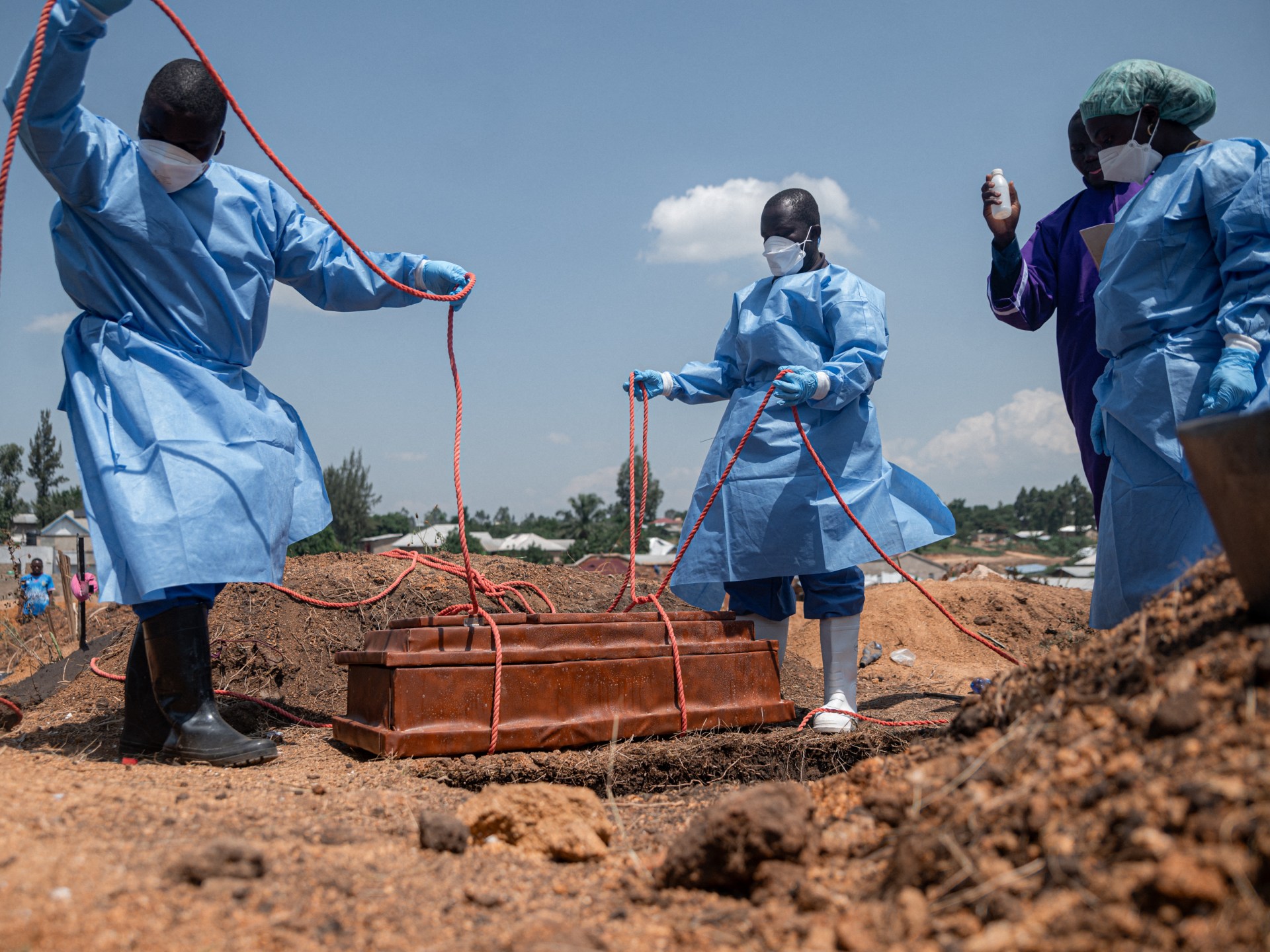
Kathmandu— The Democratic Republic of Congo (DRC) continues to grapple with an escalating Ebola outbreak, now designated as a global health emergency by the World Health Organization (WHO), after exceeding 5,000 confirmed cases and over 2,320 deaths. The current outbreak, the seventeenth in DRC’s history and its deadliest yet, is complicated by factors including armed conflict, misinformation, and a lack of approved vaccines or treatments for the Bundibugyo strain of Ebola. WHO officials convened an emergency meeting on Tuesday to assess the situation and appeal for increased international support to contain the spread, which began as early as February but was declared in May.
Escalating Crisis and Response
WHO Director-General Tedros Adhanom Ghebreyesus emphasized the severity of the situation, stating, “We must be frank: the epidemic is far from being under control.” He explained that the outbreak gained significant momentum before effective response measures could be fully implemented, leaving health officials constantly trying to catch up. The current toll surpasses previous outbreaks in the country, including one between 2018 and 2020, making this the deadliest Ebola crisis in DRC’s history.
Challenges to Containment
The response efforts are facing multiple obstacles beyond the lack of a readily available vaccine or treatment. Ongoing conflict within the mineral-rich DRC hinders access to affected areas and complicates logistical support. Misinformation and distrust towards health workers, coupled with deeply ingrained cultural traditions, also pose significant challenges in implementing effective prevention and control measures. Tedros warned that the outbreak is spreading at an “unprecedented speed,” and many transmission chains remain unidentified.
Focus on Community Engagement
Recognizing the need for a more localized approach, WHO is prioritizing community engagement, particularly among motorbike riders who are disproportionately affected due to their roles in transporting patients and deceased individuals. Dr. Thierno Balde explained that hand-washing stations and disinfectants have been provided, but the organization now aims to recruit these riders as active surveillance and response officers.
Vaccine Development and Availability
While no approved vaccine currently exists for this strain of Ebola, progress is being made in developing a potential solution. The first volunteer received an experimental vaccine in the UK last month, and hundreds of thousands of doses have been manufactured in India by scientists at Oxford University. These vaccines are poised for immediate deployment if ongoing trials prove successful.
The WHO continues to monitor the situation closely and urges international collaboration to support containment efforts until all transmission chains are identified and broken.
(With inputs from Al Jazeera)
Originally published on abcnews.com.np.





प्रतिक्रिया दिनुहोस्